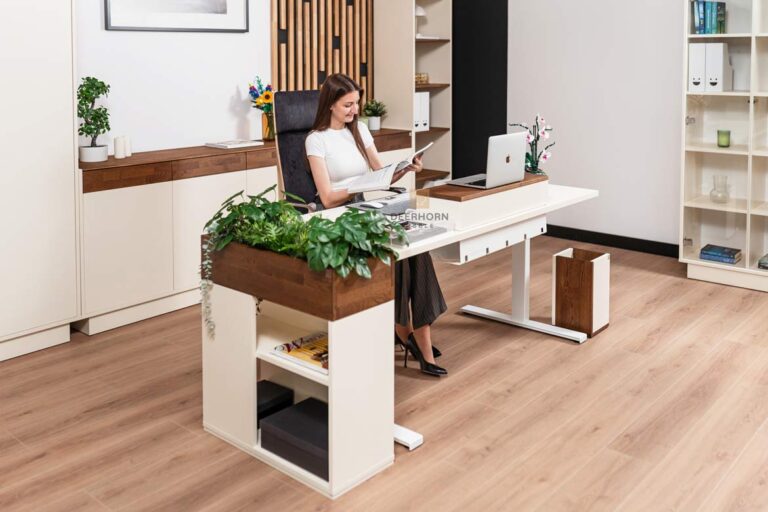
Why you should invest in a height-adjustable desk – based on scientific sources


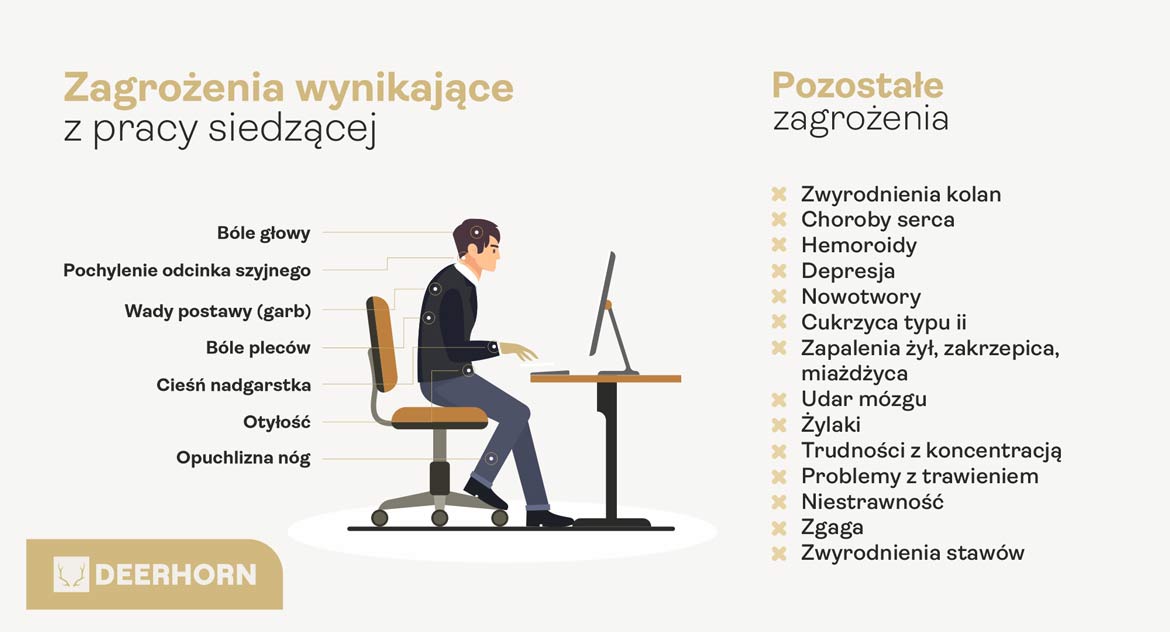
Modern office work often means sitting for hours on end. Epidemiological studies show that long periods spent sitting increases the risk of cardiovascular disease, type 2 diabetes, some cancers and premature death. An analysis involving more than one million people found that the least active (< 2.5 MET-hours/week) who sat for more than 8 h a day had as much as a 59% higher risk of death than the most active. The accumulation of sitting in long, uninterrupted episodes of more than 10 minutes also doubled the risk of death. However, it is difficult to maintain the required 60-75 minutes of moderate physical activity per day that eliminates the risks associated with sitting. That’s why more and more people are turning to height-adjustable desks that allow them to actively change their position at work and reduce the harmful effects of sedentary lifestyles.
What does the research say about sit-stand desks?
Reduction in sitting time
A network meta-analysis of 23 randomized trials involving 1, 428 office workers found that sit-stand desks significantly reduced sitting time at work, with an average difference of 1.1 standard deviation units (SMD = -1.10) compared to traditional desks. When the desks were combined with posture change reminders or coaching programs, the effect was even greater (SMD to -1.50). In a pilot study of 15 overweight people, height desks were provided for 24 weeks; at weeks 12 and 24, daily sitting time dropped by about 90 minutes.
Improving the health of the musculoskeletal system
Using an adjustable desk for several months can reduce pain. In a 6-month Portuguese RCT involving 39 office workers, the sit-stand desk group reported a decrease in body fat percentage (-3.7%) and a reduction in the experience of musculoskeletal pain and discomfort (-4.9 points on a scale). A Japanese study of 2021, lasting three months, showed a reduction in neck and shoulder pain and improved self-rated work performance. In a short laboratory randomized crossover study, changing position every 30 minutes lowered subjective discomfort and reduced physical fatigue.

Better well-being and productivity
Height-adjustable desks can positively impact mental health and performance. A scoping review of 17 studies in academia noted that intermittent sitting improves mood, reduces stress and anxiety in several studies, and does not impair educational or work performance. Portuguese participants in SUFHA reported improved quality of life and a decrease in fatigue and need for recovery after work. In a Japanese RCT, employees rated desks as improving their subjective health and increasing vitality at work.
Energy and metabolism
A tall desk helps burn more calories than sitting. A study comparing 30-minute writing sessions in obese people found that working while standing increased energy expenditure by about 7.4 kcal per half hour(≈ 14.7%) compared to sitting. Although the difference seems small, daily small changes accumulate to support weight control.
Rules for using an adjustable desk
The key is to change positions. Working 100% standing can strain the legs and cardiovascular system, and prolonged sitting is harmful. A new randomized trial of 2025 (Griffith University & University of Queensland) compared a fixed regimen of 30 minutes of sitting to 15 minutes of standing with any self-determined rhythm. Both approaches reduced back pain, but the 30:15 schedule further reduced stress and improved concentration, making it easier to maintain. Regardless of the strategy chosen, regular changes of position every 30-60 minutes are recommended by experts.
Why choose a Deerhorn desk
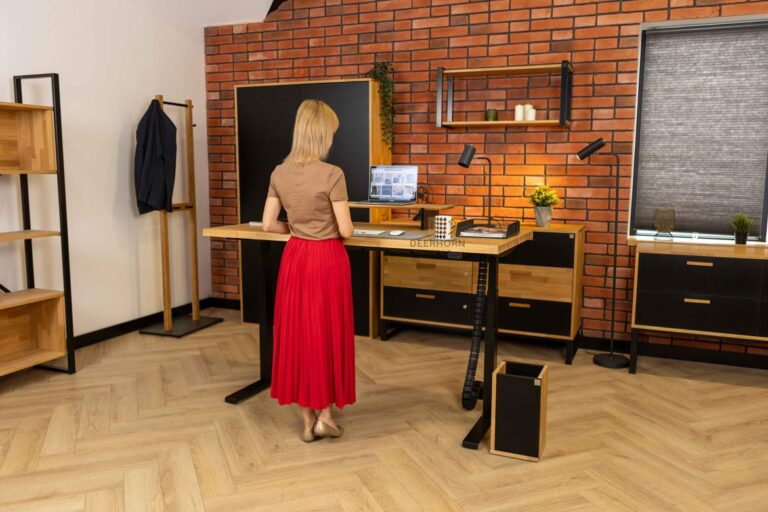
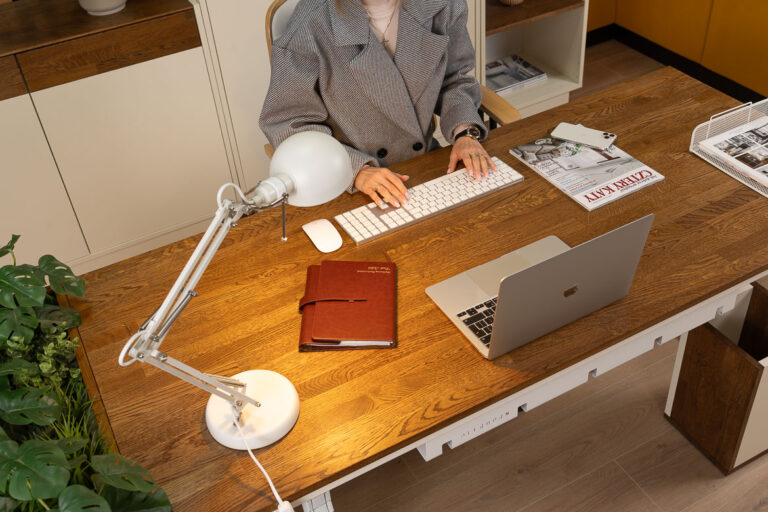
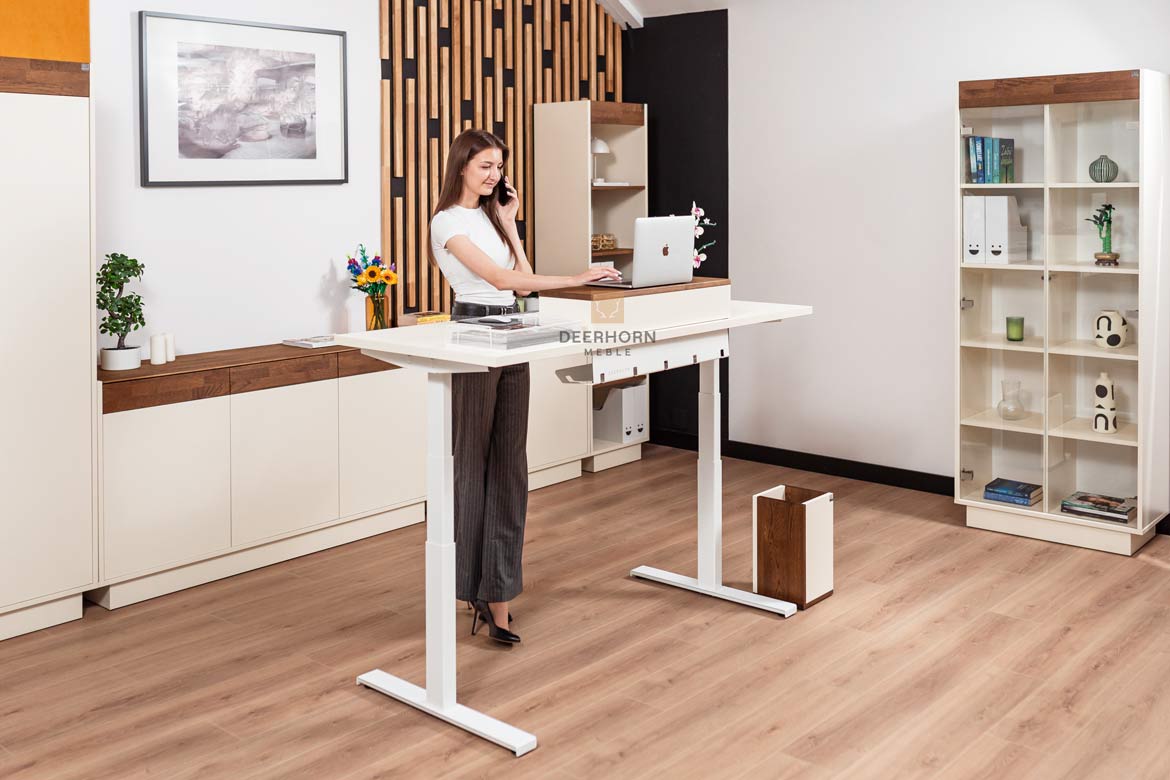
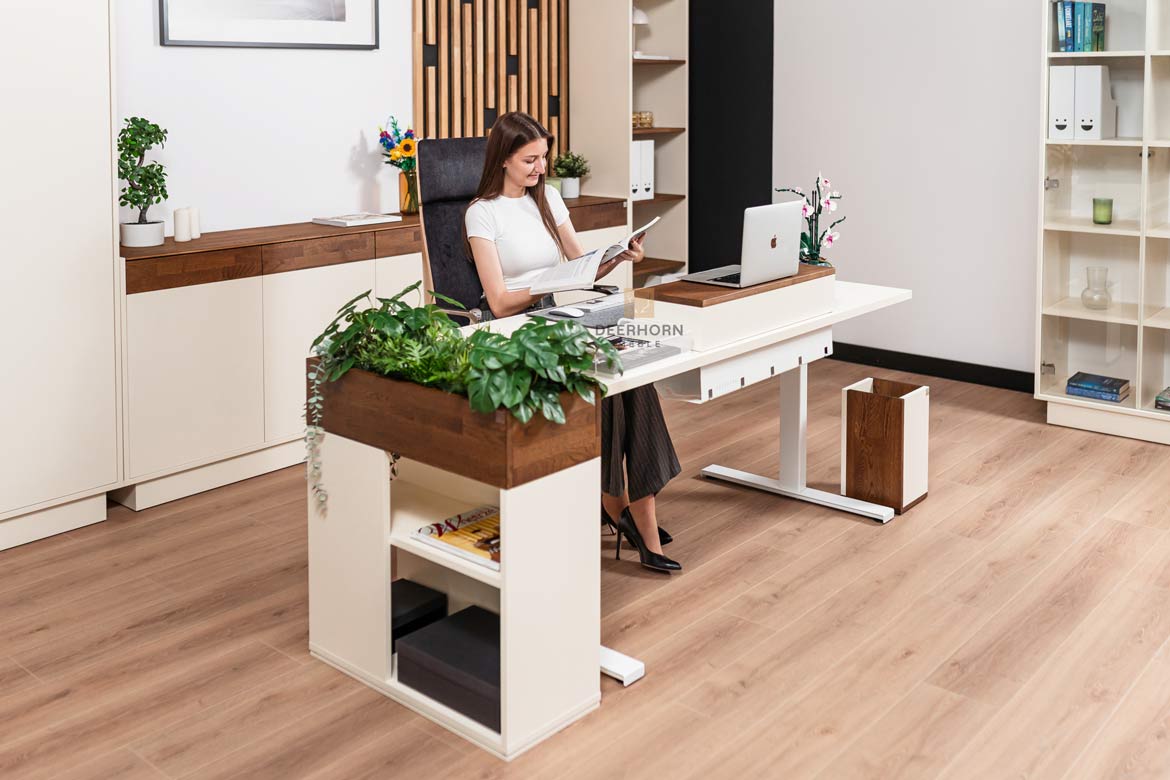
Deerhorn offers modern height-adjustable desks that combine ergonomics, solid workmanship and aesthetic design. Thanks to the electric adjustment mechanism, you can smoothly adjust the height of the tabletop for sitting and standing, and the memory function allows you to save your favorite settings. Tops made of high-quality materials and stable construction ensure comfortable work and long product life.
Key benefits of Deerhorn desks
- Health – reducing the risk of diseases resulting from prolonged sitting and reducing back pain and muscle tension.
- Productivity – a greater sense of energy and concentration through repositioning, as confirmed by randomized trials.
- User customization – precise height adjustment, programmable settings, compatibility with various chairs and accessories.
- Aesthetics and durability – minimalist design suitable for home office and professional environment, solid materials and stable construction.


Summary
Working at a height-adjustable desk is not just a fad, but an investment in health. Science shows that sitting for long periods of time increases the risk of many diseases, but regular repositioning can effectively offset these risks. Deerhorn desks make it easy to incorporate movement into your daily routine, improving your well-being and productivity, while their high quality and modern design make them an attractive addition to any office. We encourage you to choose a height-adjustable desk – a step towards a healthier and more comfortable work life.


Read more!
- Desk, treadmill and health – how to combine work with physical activity?
- Ergonomic workstation – myth or revolution at work?
FAQ – questions and answers
Does sitting at work for long periods of time really harm your health?
Yes. Studies show that sitting for hours without breaks increases the risk of cardiovascular disease, type 2 diabetes, some cancers and premature death. Sitting in long, uninterrupted blocks is particularly detrimental.
Does a height-adjustable desk actually help reduce sitting?
Yes. Randomized studies have shown that the use of sit-stand desks significantly reduces the amount of time spent sitting during the workday – by as much as tens of minutes per day, and even by more than an hour with regular use.
How often should I change my position at an adjustable desk?
Experts recommend changing positions every 30-60 minutes. A pattern of 30 minutes of sitting and 15 minutes of standing is often recommended, which is easy to maintain and good for concentration and mood.
Is standing work healthier than sitting?
Standing work should not completely replace sitting. The key is to alternate. Standing for long periods of time can also strain the body, so the best solution is to change positions regularly throughout the day.
Do sit-stand desks affect back and neck pain?
Yes. Studies show that regular use of an adjustable desk can reduce back, neck and shoulder pain and reduce feelings of muscle stiffness and fatigue
Does working at a regulated desk improve concentration and productivity?
Many studies have reported improved well-being, greater vitality at work and better focus. Importantly, repositioning does not impair productivity, and often supports it.
Does a height-adjustable desk help you burn more calories?
Yes, although the differences are moderate. Standing work increases energy expenditure compared to sitting. However, small shifts, repeated daily, can promote metabolism and weight control.
Will a height-adjustable desk work in a home office?
Definitely yes. It’s a solution that fits well for both remote work and corporate offices. It simplifies the organization of the workday and allows you to take care of your health without leaving home.
Does using an adjustable desk require special habits?
The most important habit is to remember to change positions. Setting memory functions, reminders or establishing a steady rhythm are helpful. The rest comes naturally with daily use.
Why choose a Deerhorn adjustable height desk?
Deerhorn desks combine everyday comfort, solid workmanship and aesthetics. Smooth adjustment, stable construction and durable materials make it a solution for years – promoting health, comfort and efficient work.