How to turn a communist-era staircase into a modern space?


This post is not a technical guide. It’s a story about change – about courage, decisions and the journey from a communist-era stairwell to a modern space that you really want to be in.
The change began with a simple desire – a desire for something new. Our house had a history in it that had been built over decades. Elements that once proudly served for years, today began to lose their luster. We felt that it was not what we wanted now. This was the moment when we decided: it was time for a change.
We were not professionals, but we had a vision – and a vision that was not at all obvious. We knew we wanted more than just a refresh of what was there. We wanted to create a space that would be ours, that would combine functionality with beauty, and above all – that would reflect our style.
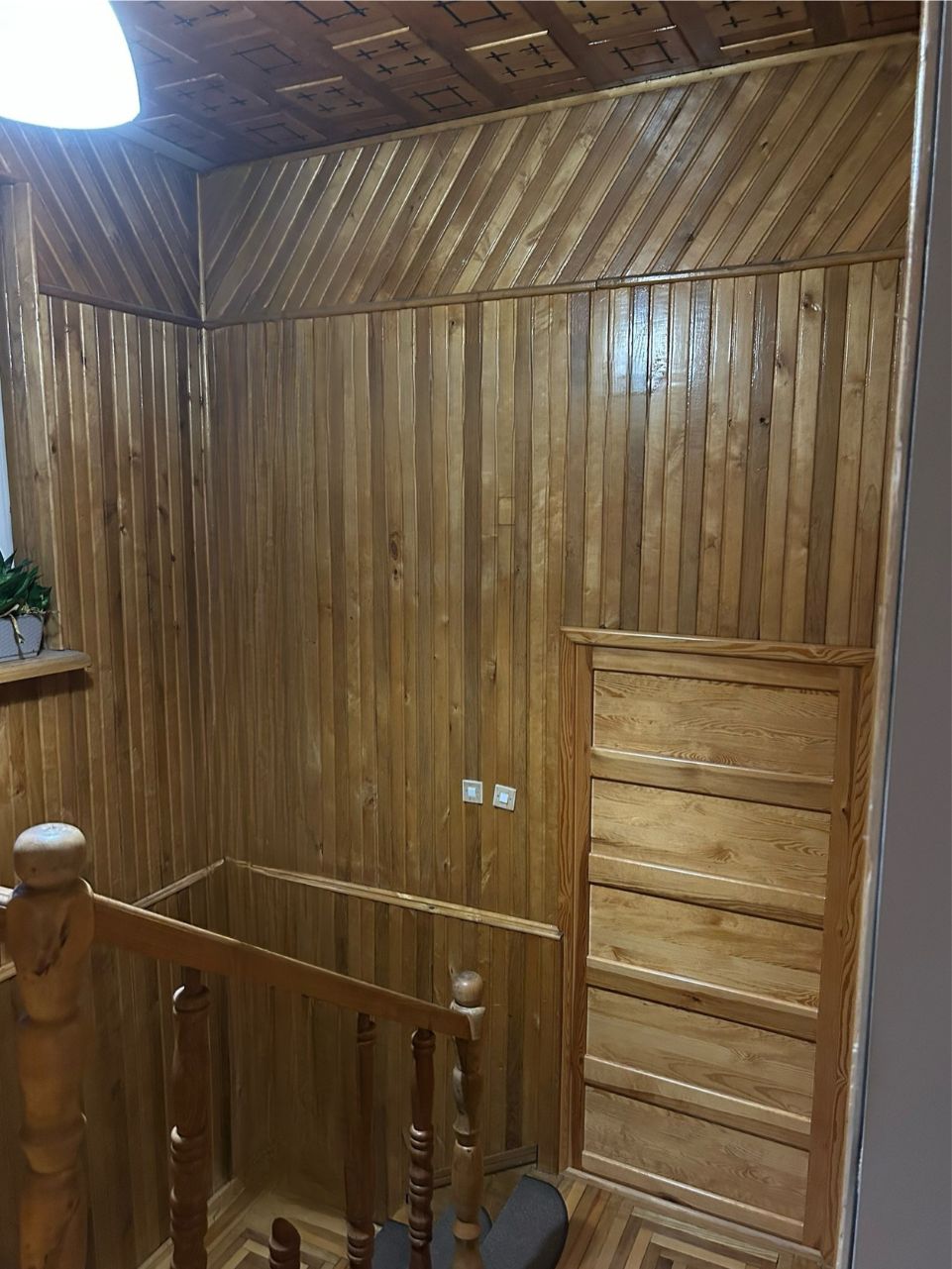
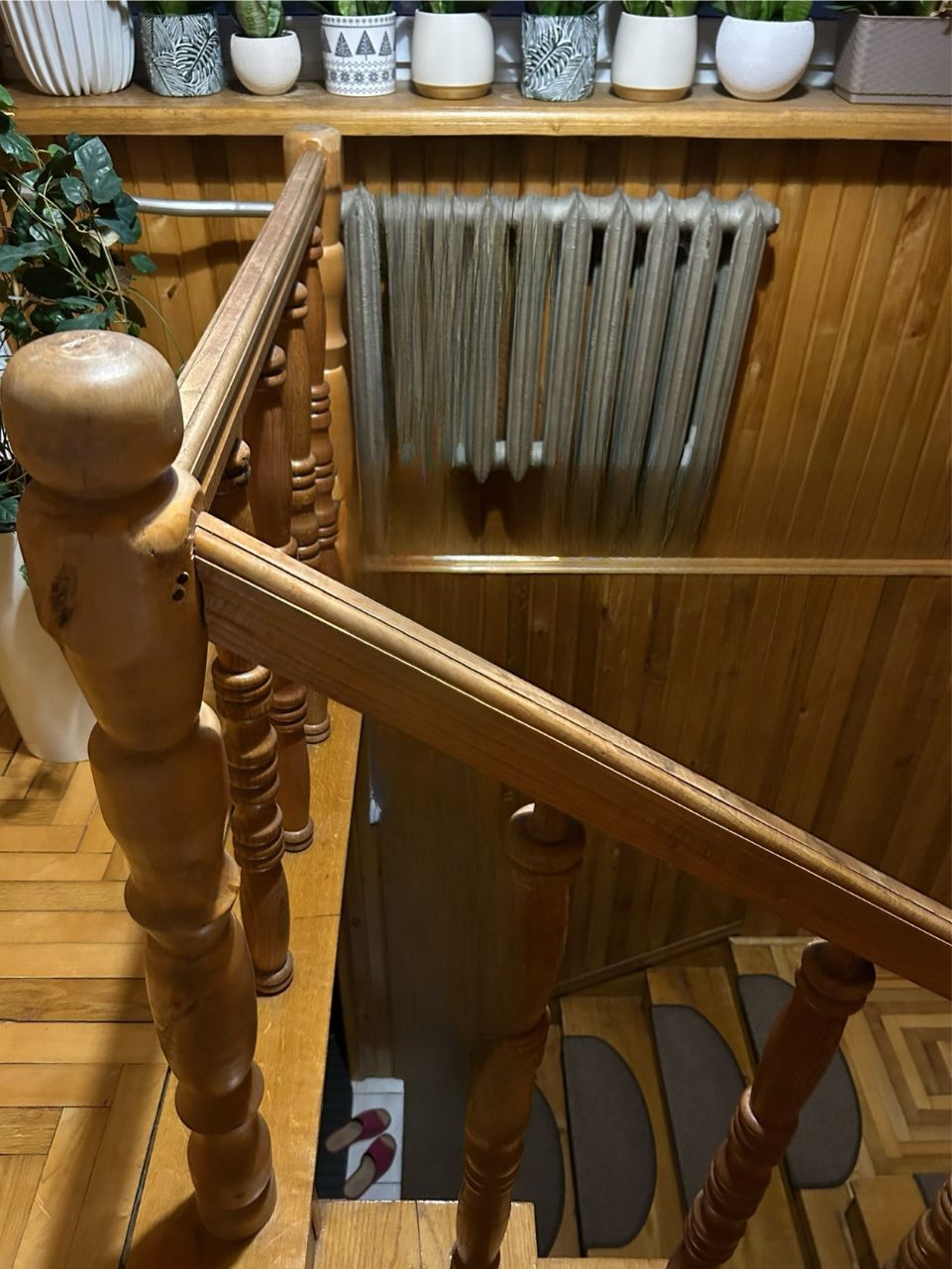
February 2025 – the beginning of real change
This was not an overnight decision. It matured in us gradually, between daily conversations, inspirations picked up on the web and thoughts about how we wanted to live in the house for years to come. We wanted solutions that not only look good, but also give a sense of calm, solidity and quality. We wanted every detail to have a purpose – not an accident, but a conscious choice.
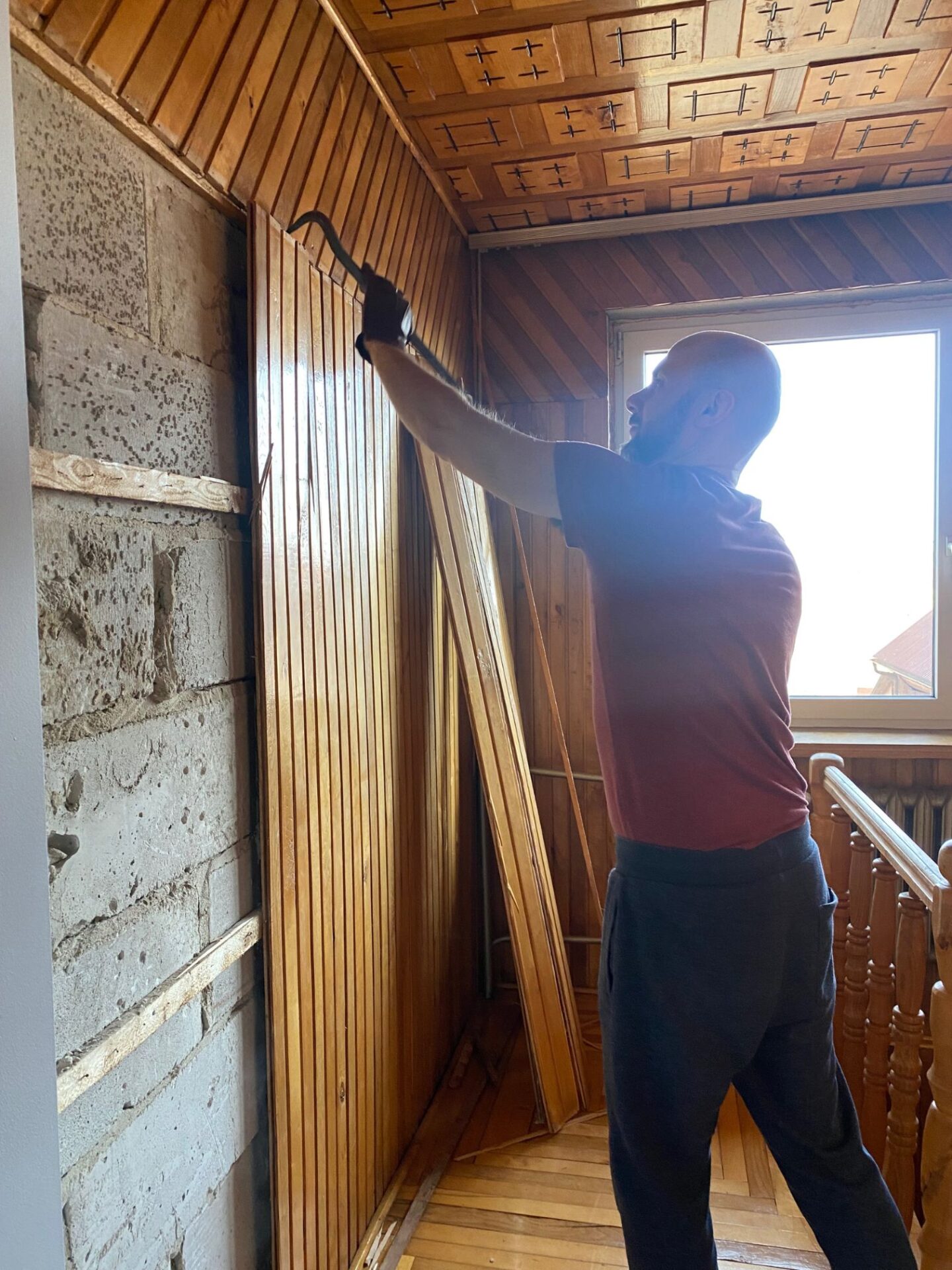
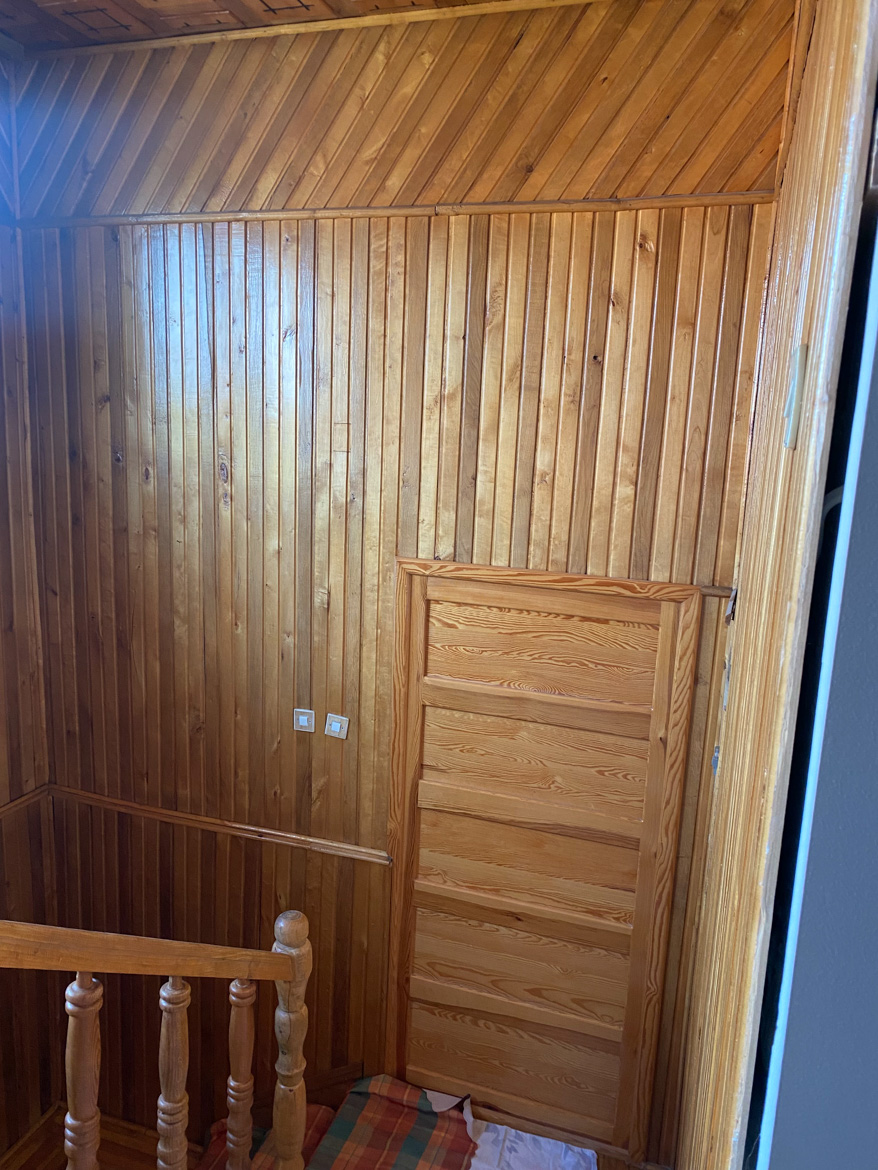
Once we were fully determined to change, it was time for the most difficult stage – the moment of parting with what was. And this was not at all easy. The staircase we had known for years had to disappear. This really meant one thing: the dismantling of the old paneling, which for many years had been synonymous with elegance, solidity and even a certain luxury.
For many, it was a symbol of “good home” – warmth, order and permanence. And for years it indeed fulfilled its role. But times have changed, and with them our needs and outlook on space. What once delighted, today began to overwhelm and limit the possibilities of creating something new.
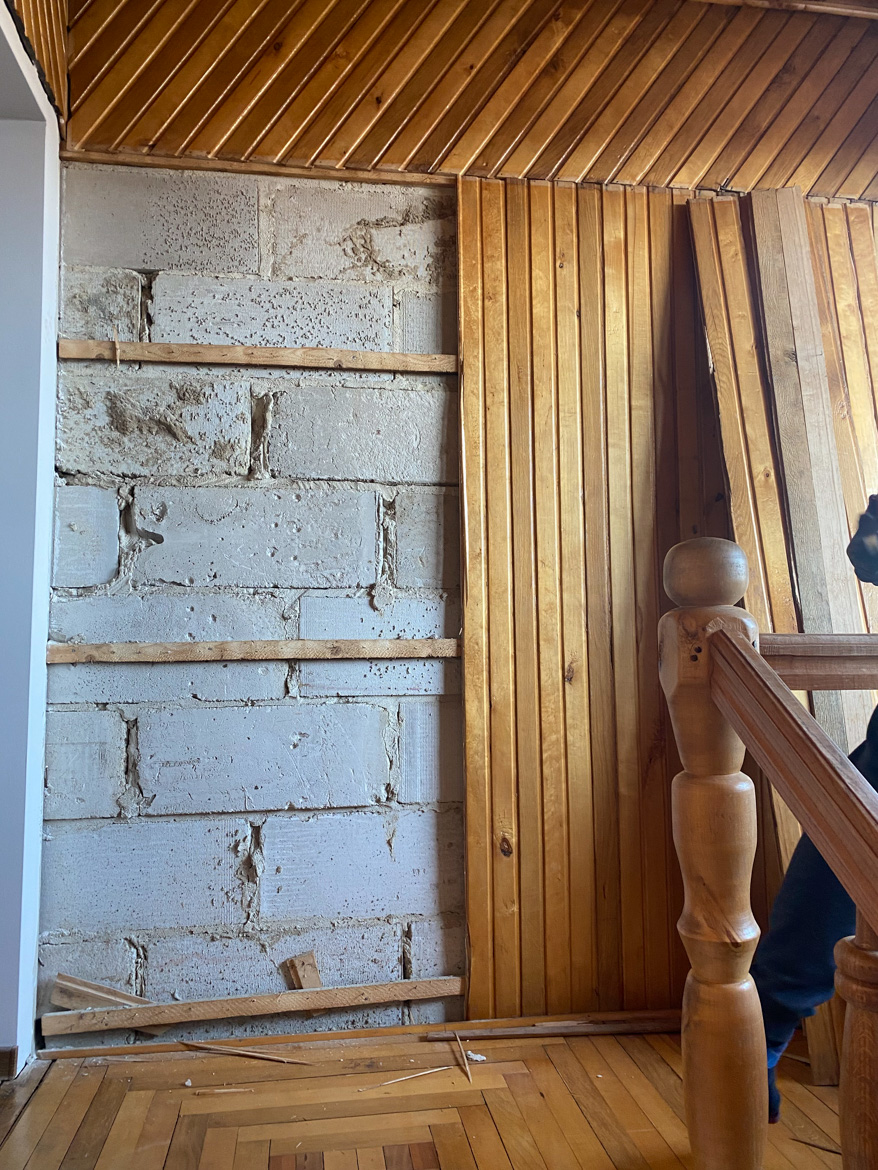
That watershed moment came in February 2025. That’s when the final decision was made, and that’s when the real renovation began. The demolition of the staircase was like a symbolic closing of a certain stage – noisy, dirty, full of dust, but also bringing great relief. Every plank of paneling that was removed revealed not only the walls, but also a space that was previously difficult to imagine.
There was a moment of hesitation in all of this – because demolition is always awe-inspiring – but at the same time there was an exciting sense that we were making room for something yet to be built. February 2025 became for us the beginning of a new story for the house. A story in which the courage to change proved more important than sentiment, and the vision of the future stronger than attachment to the past.
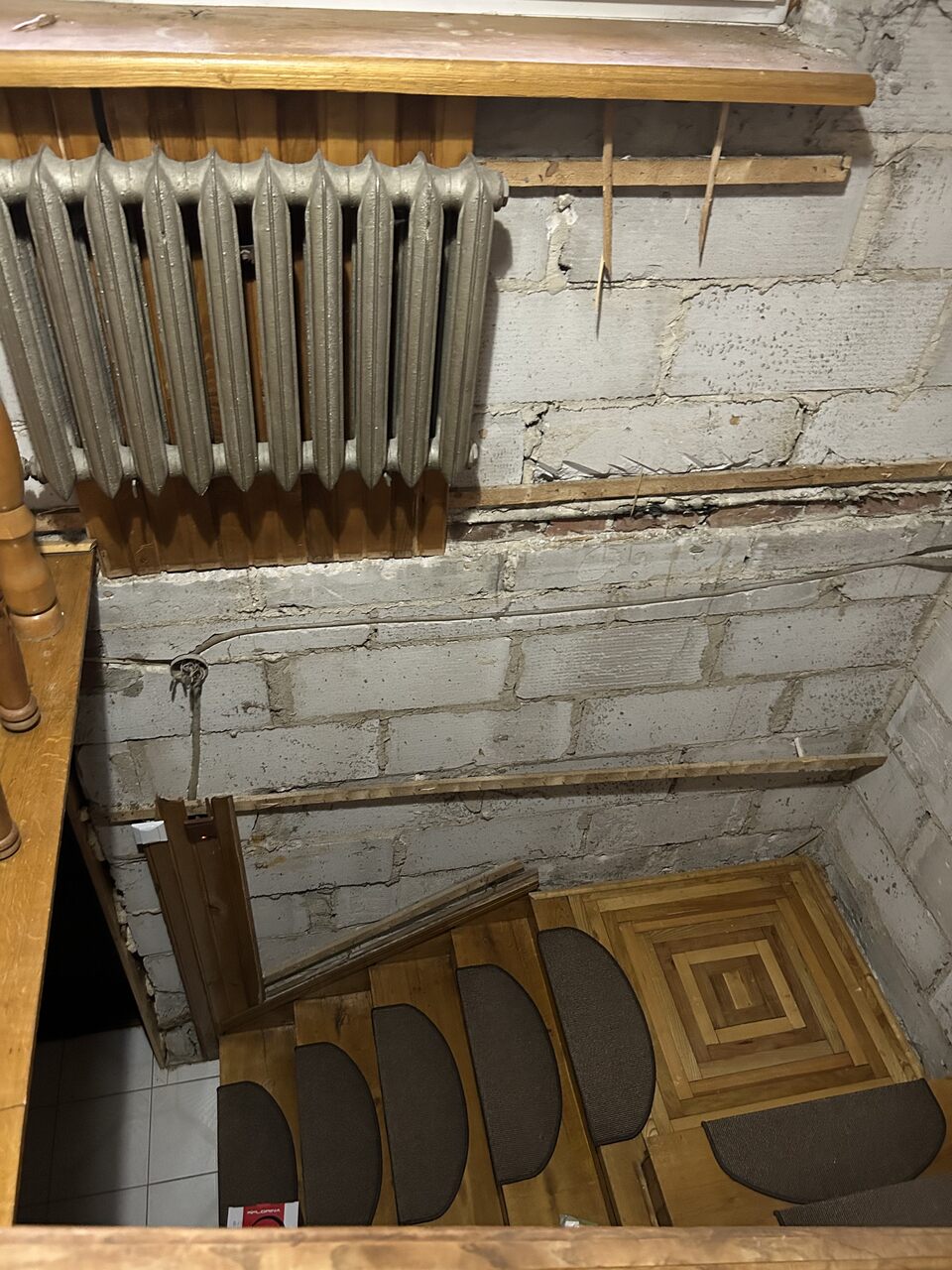
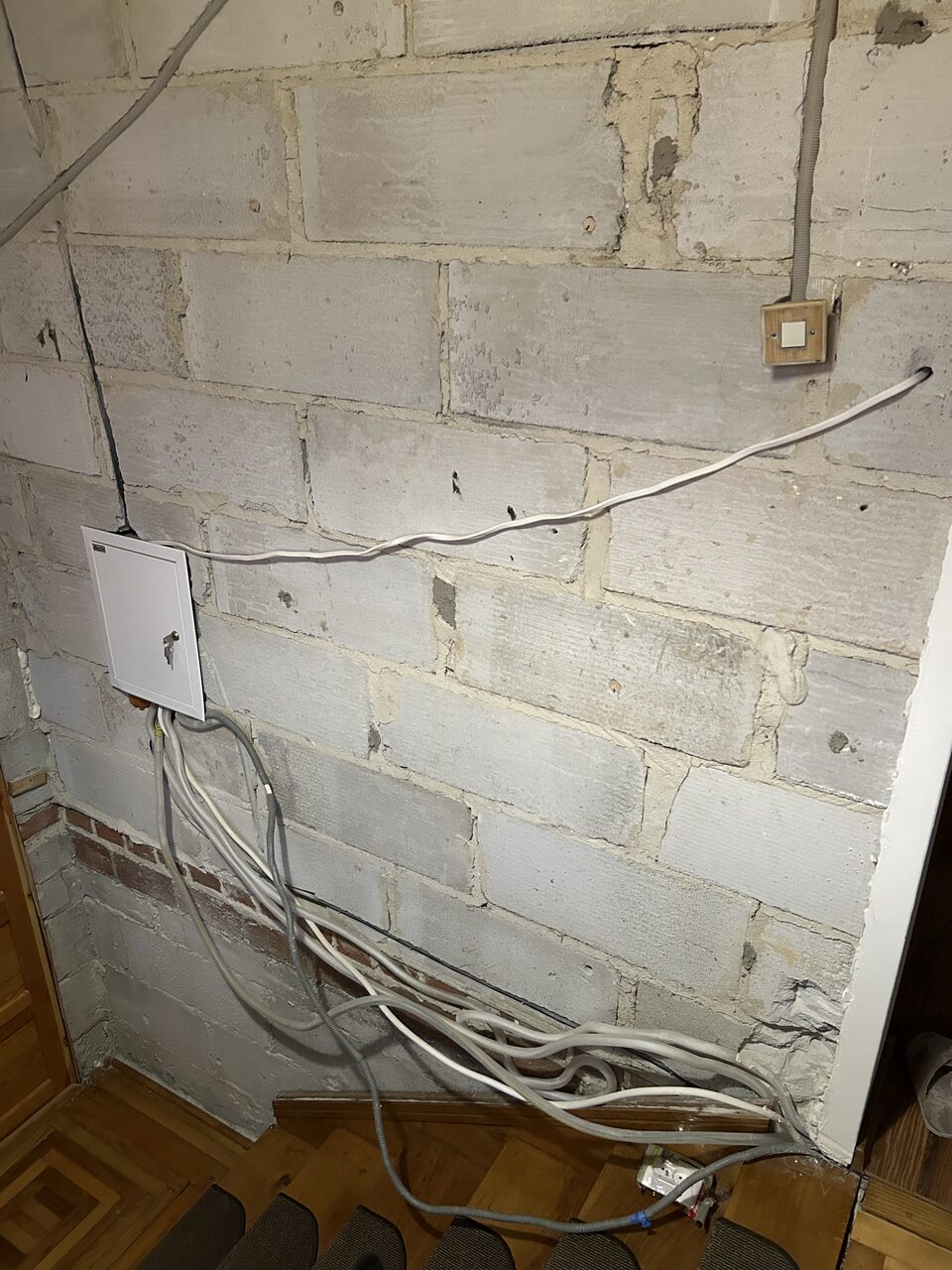
Doors, electrics and first surprises
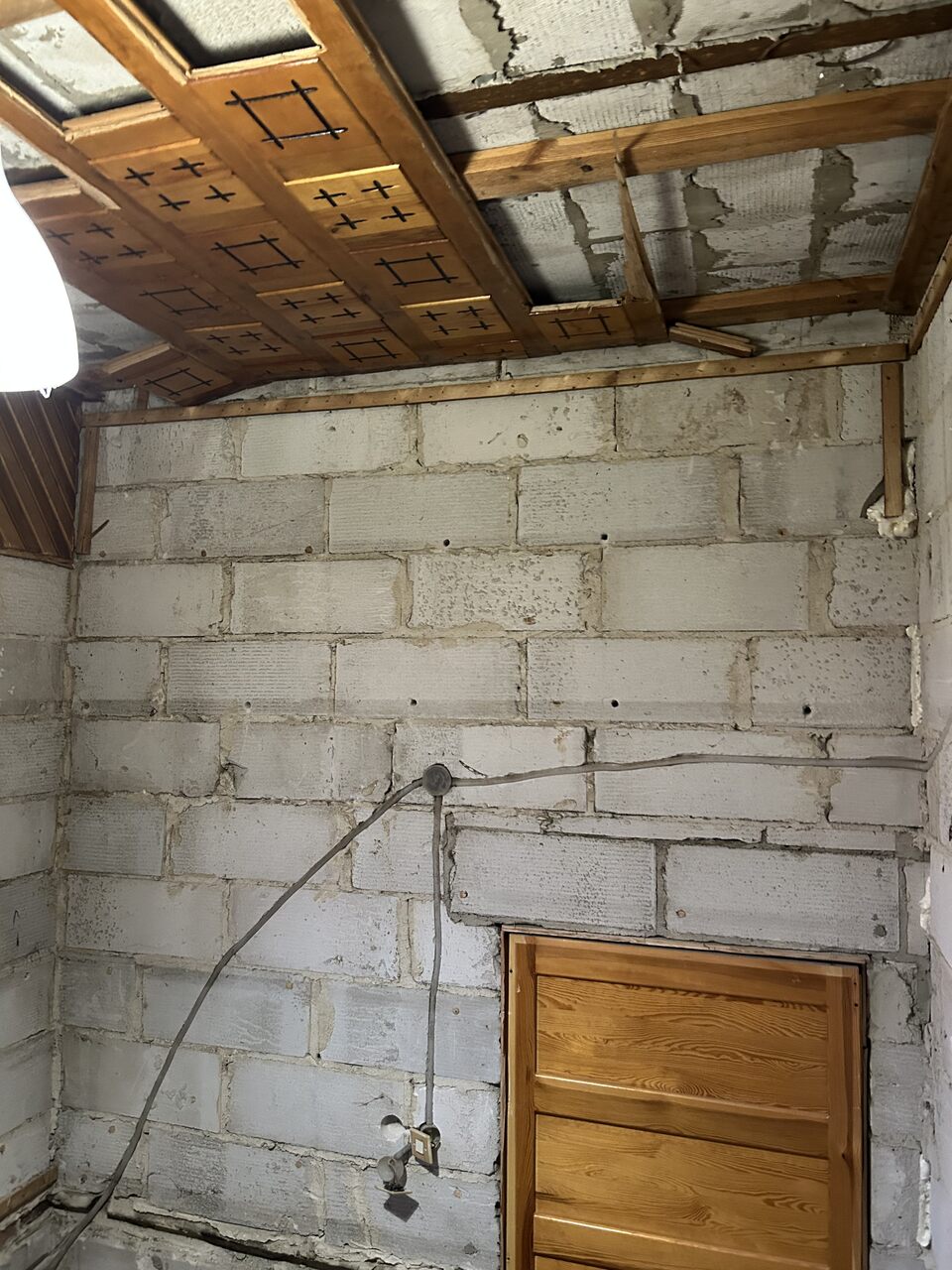
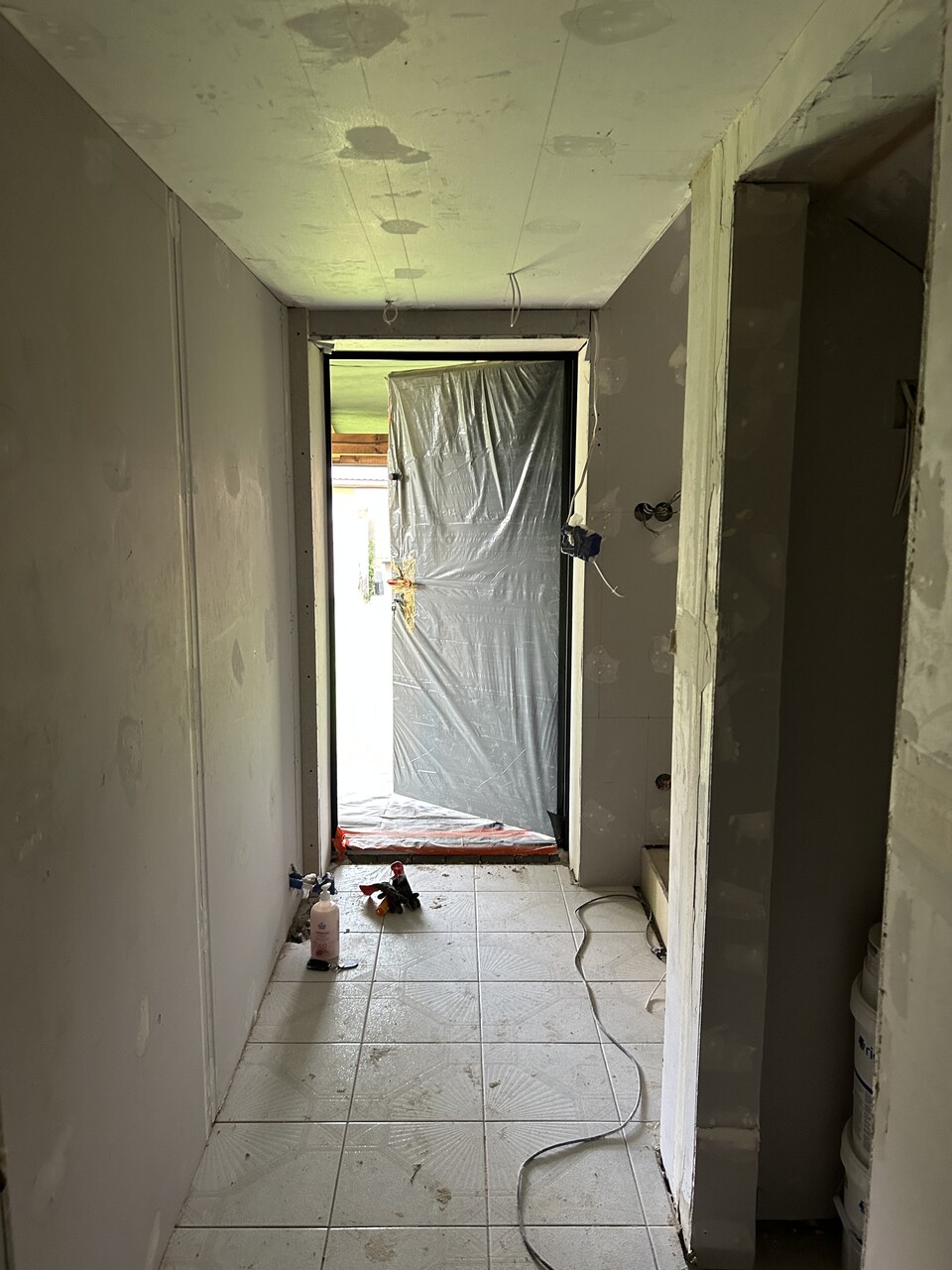
After demolishing the staircase, it quickly became apparent that changes could not stop at just one element. The natural next step was to replace the doors, which over the years had ceased to fulfill their primary function. They were leaky, light could be seen through them in many places, and the sense of security they should have provided had long since evaporated. We knew that this was an element that could not be overlooked if we were thinking about real improvements to the comfort and quality of the house.
However, the process of ordering a new door brought the first major test of nerves. Due to the oversight of the person responsible for the measurement , we nearly ordered a door in the wrong dimension. This was the moment when we once again learned the importance of vigilance at every stage of the renovation. In the end, despite the fact that the door was already ready, reality verified the plan – it was necessary to interfere with the lintel, which had to be partially unbolted so that the new door could be installed at all.
It was not an easy moment. More dust, noise and additional work that no one had planned, but at the same time it was the first really visible sign that the house was beginning to change. The new door, despite the difficult beginning, became a symbol of moving forward and not backing away from obstacles.
And that was just the beginning. Even then, we knew that there would be a few more surprises along the way – ones that couldn’t be predicted at the planning and visualization stage. But about them we were to find out in the course, along with the next stages of the renovation.
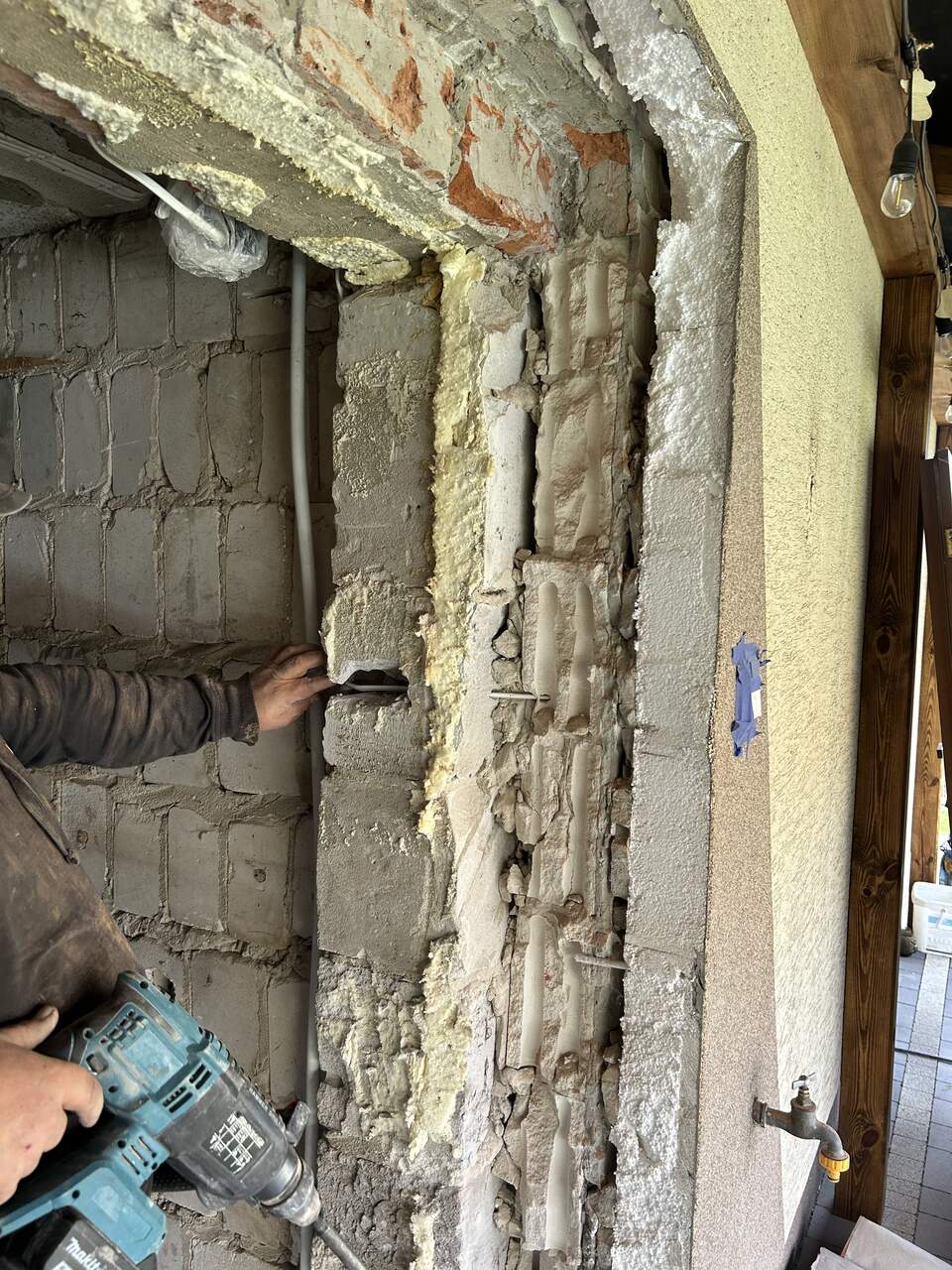
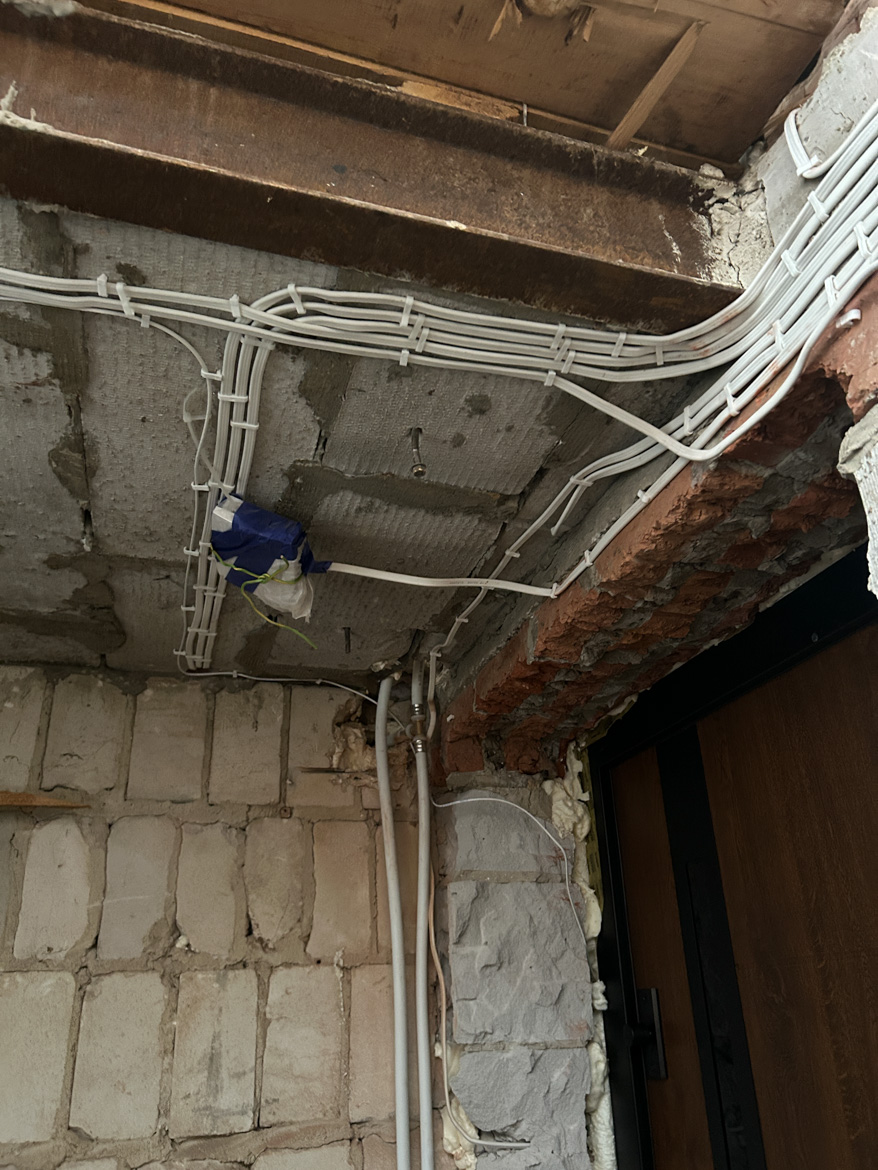
A further stage of the work involved completely new routing of the electrical system. We knew that if we were already interfering with the space so much, we couldn’t compromise. The old installation was not adapted either to modern needs or to the vision we had in our minds. Therefore, the decision was made to make new cable routes and add outlets exactly where they would actually be needed – not where it used to be easiest to install them.
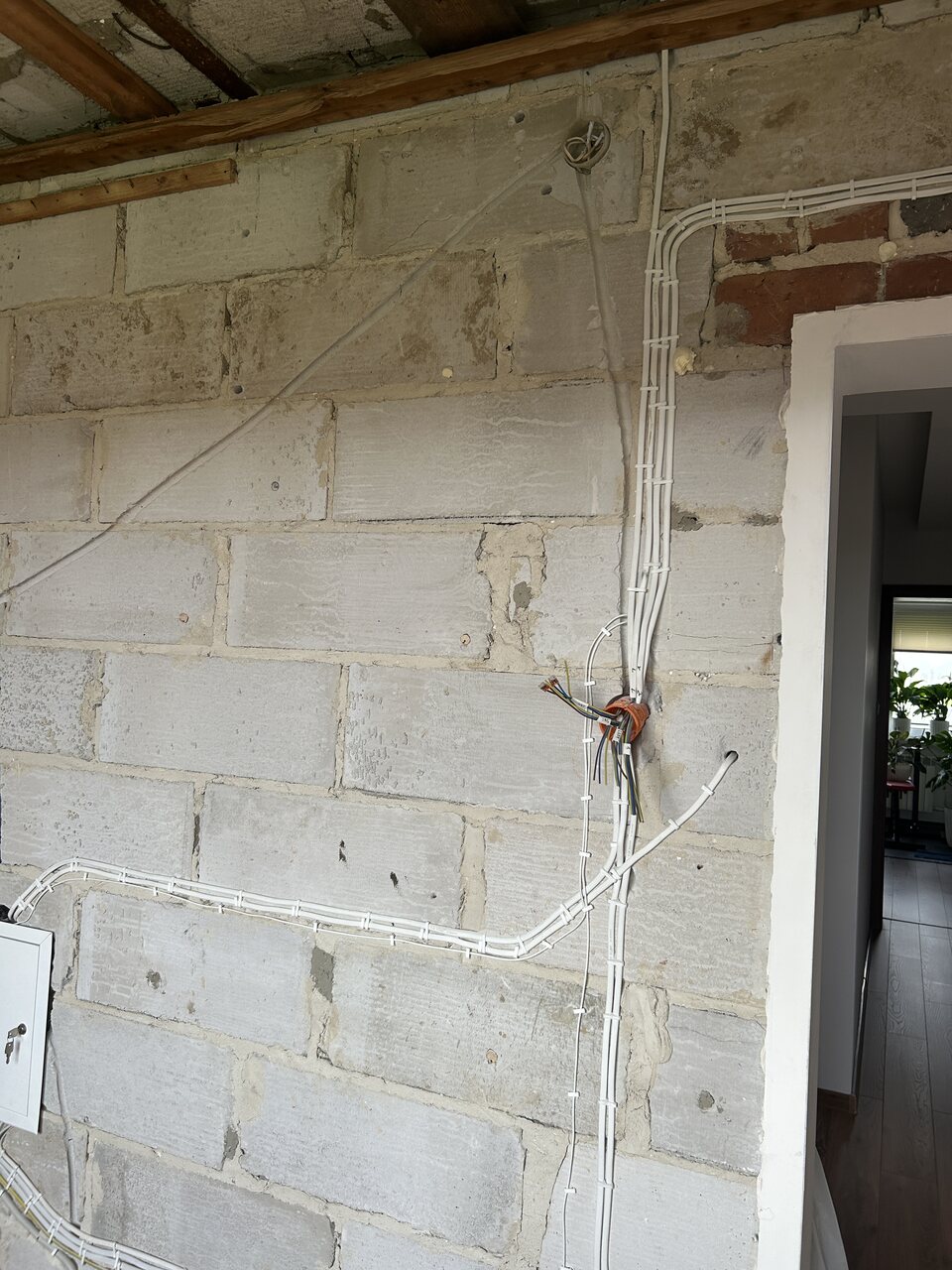
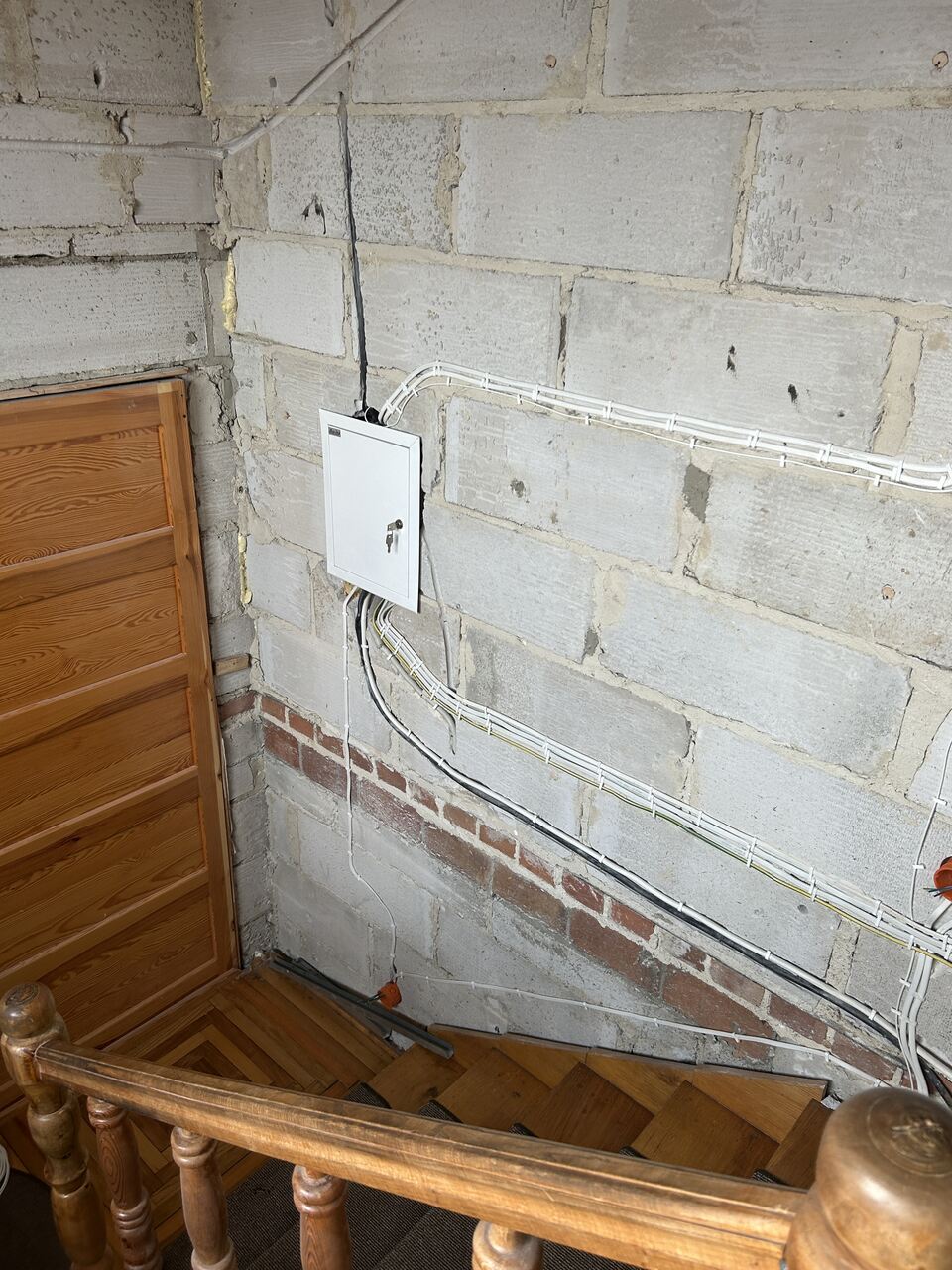
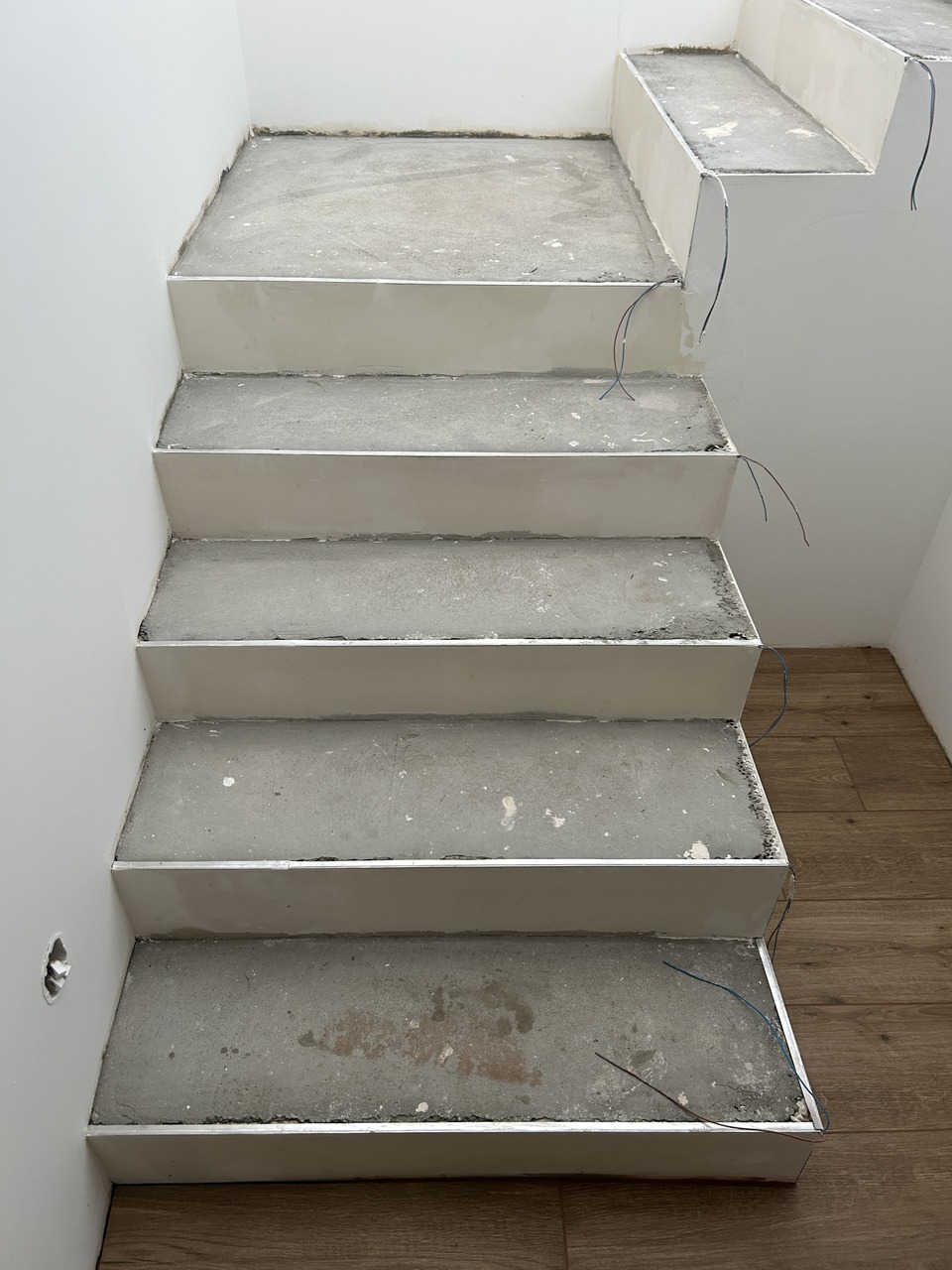
Already at this stage, we started thinking about the future and the details that would build the atmosphere of the entire staircase. We planned a separate power supply for the roller shutters, wires for the video intercom, as well as an installation that would allow control and expansion of the systems in the future. Every cable had its place and its justification – nothing was accidental.
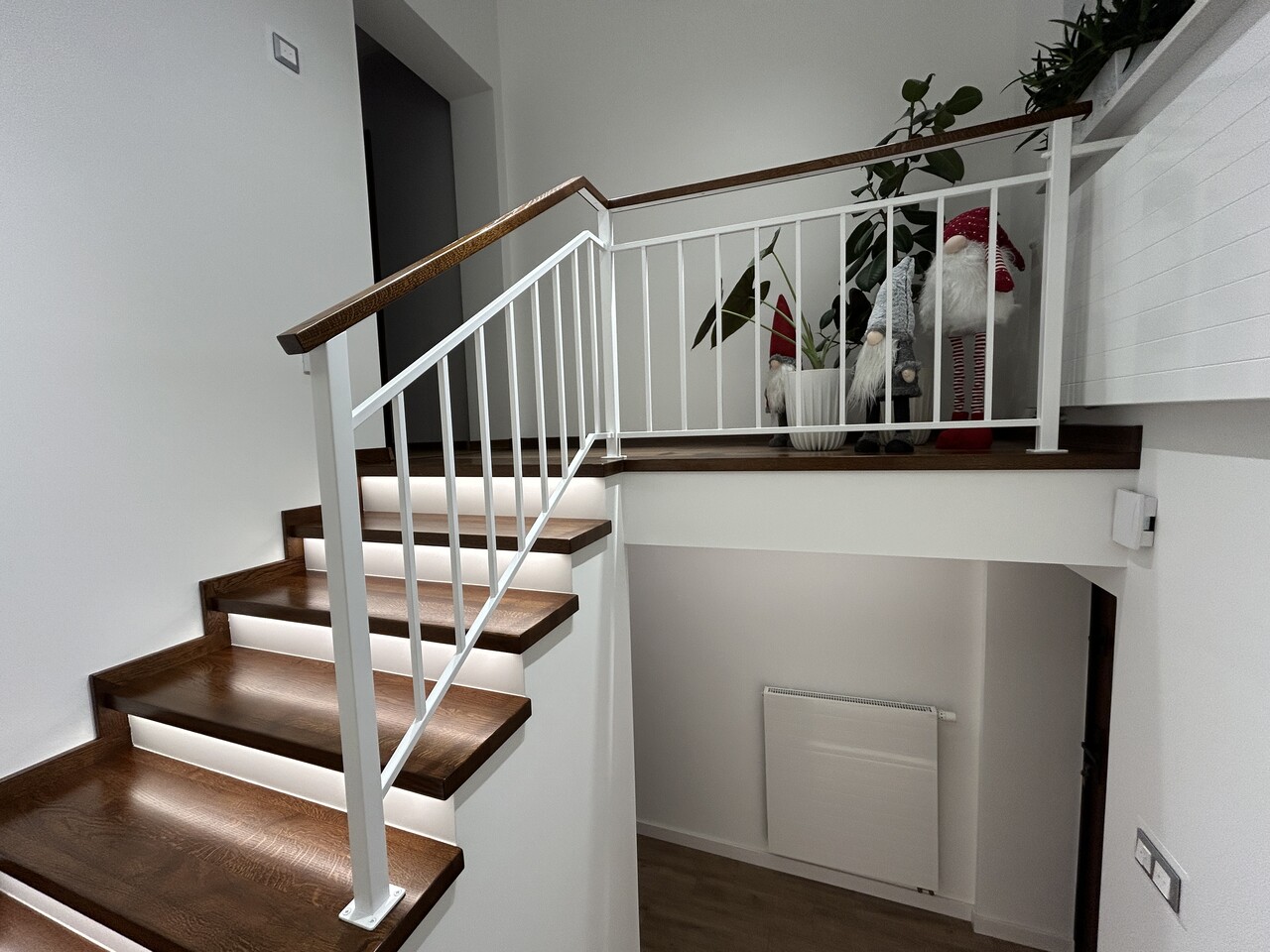
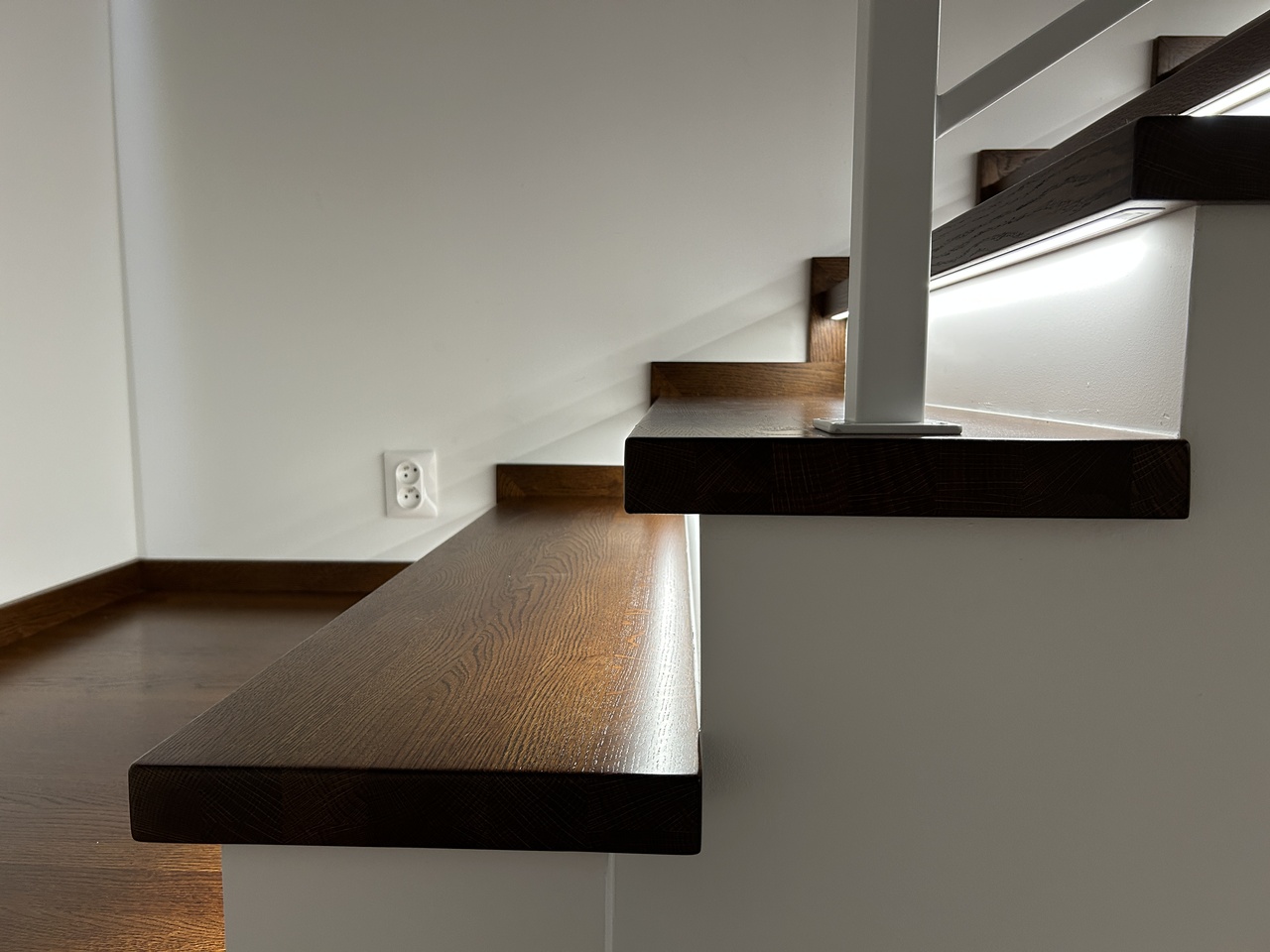
We paid special attention to lighting. From the beginning, we wanted the staircase to be not just a transition between floors, but a space that is alive with light. We planned backlighting under the stair treads, lights accenting the walls, as well as additional points to build mood after dark. As a result, the staircase was to shine from all sides – subtly, multilevelly and in different ways, depending on the time of day and needs.
This was the moment when the vision began to take real shape, although at first glance we could only see cables sticking out of the walls. But we knew that this was the stage that would determine functionality and comfort for years to come. Because well-planned electrics are something you don’t see later – but feel every day.
Window and plumbing – moments of relief and more trials
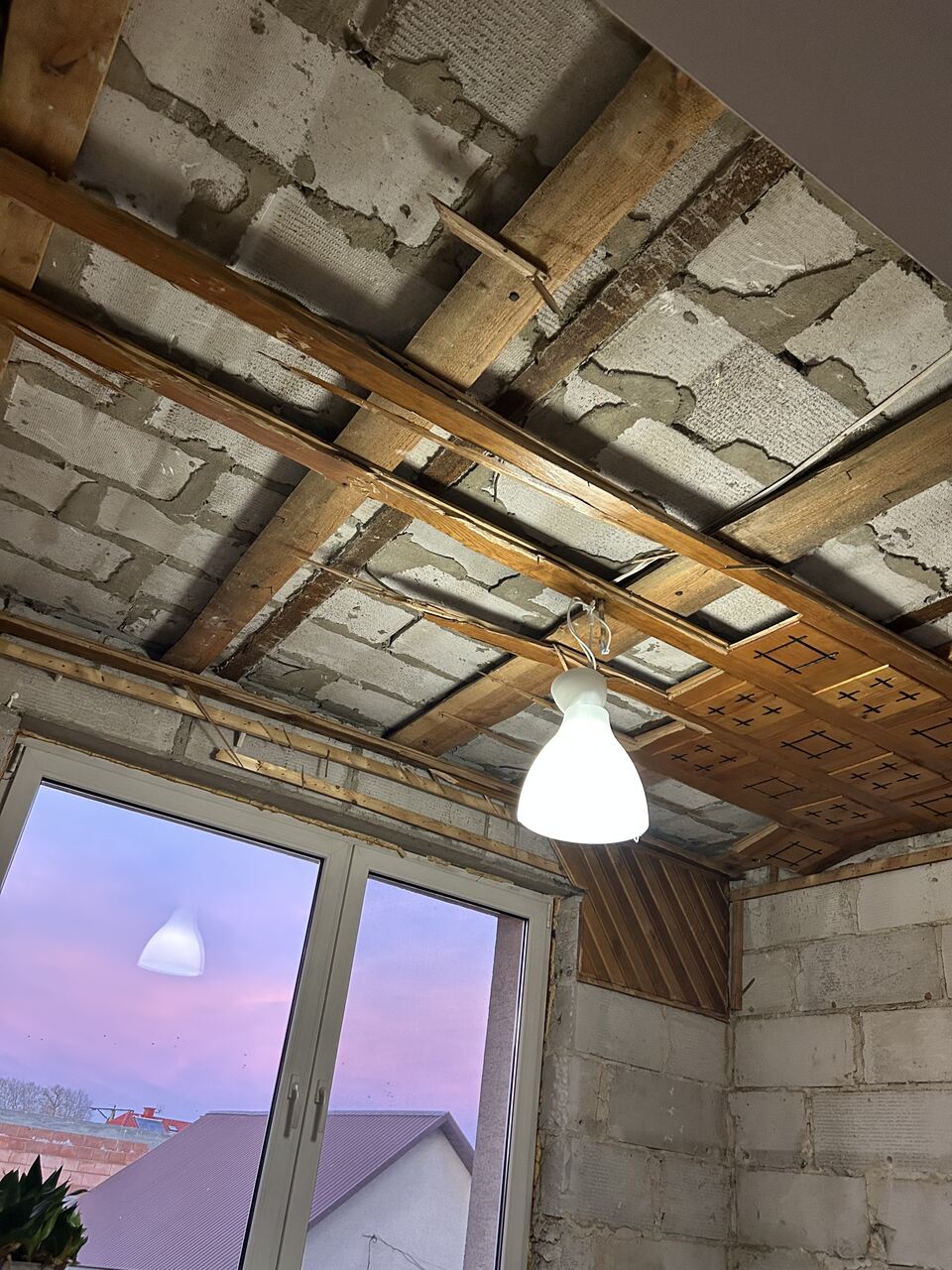
Continuing the work was the insertion of a new window. It is worth mentioning that the window had been here before – but, like many other elements in the house, it had ceased to serve its function over the years. It was leaky, let the cold through and did not provide the comfort we expected. So we knew that its replacement was inevitable if we wanted the staircase to be a space that was not only pretty, but also warm and functional.
Fortunately, this time there were no surprises. The new window was fitted perfectly, the installation went smoothly and without complications – which after previous experiences was a real relief for us. Phew 🙂. With its installation, more light came into the interior, and the staircase itself immediately gained lightness and freshness.
It was one of those moments when we could breathe for a moment and see the real progress of the work – no dust, no stripping, just a step forward well done. A small step, yet very important for the final comfort and quality of the entire space.
Next came the plumbing – a stage that proved to be one of the more challenging for us. Unfortunately, not everything went according to plan. The first plumber did not complete the work and did not meet our expectations, which naturally introduced a lot of uncertainty and frustration. At such moments, one begins to wonder if everything is going in the right direction.
However, we had no choice – we had to move on. We decided to use another professional. And it was a good decision. After just a short time, observing the way he worked, the thoroughness and calmness with which he carried out the subsequent tasks, our confidence began to return. With each passing hour, the tension diminished, and there was hope that this stage could finally be closed.
In the end, the plumbing was done as it should be – solidly and according to plan. It was an important moment, because it closed the installation stage and opened the door to what we were waiting for the most.
General renovation and decorative work
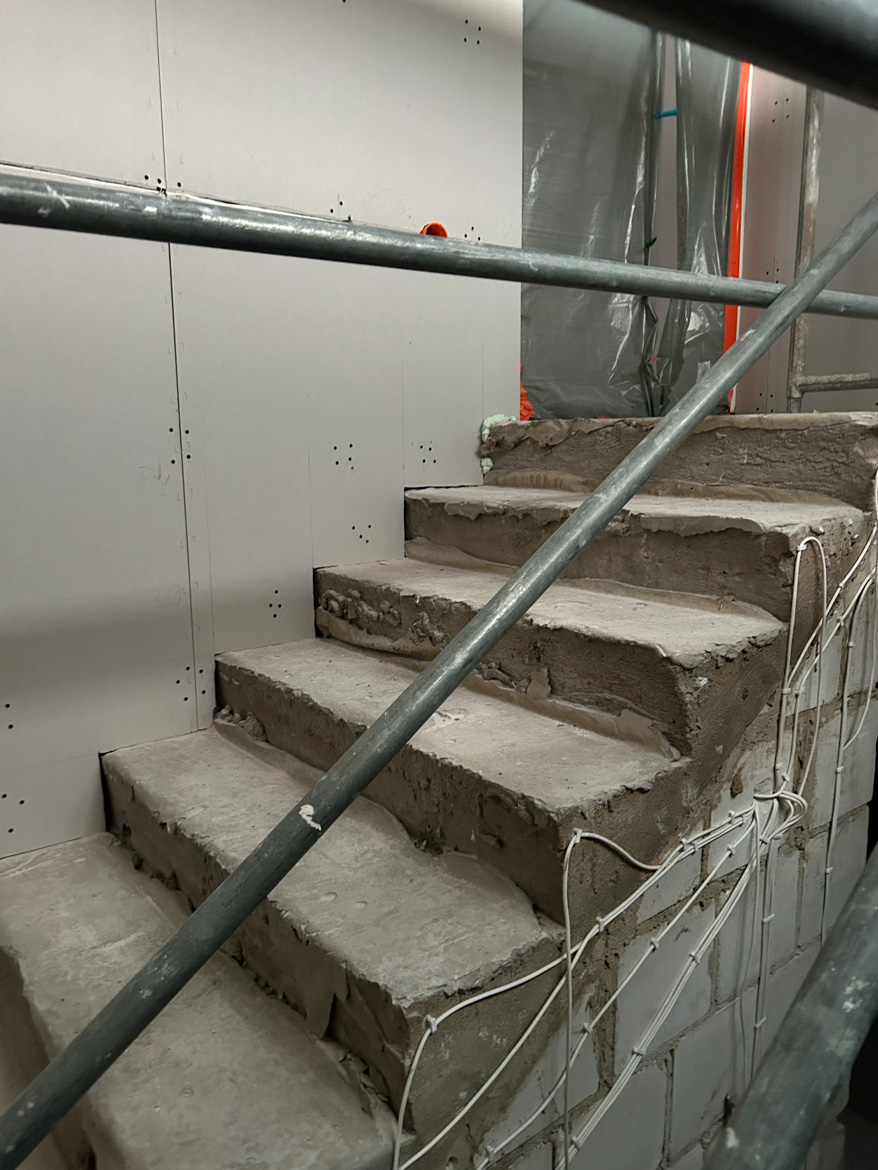
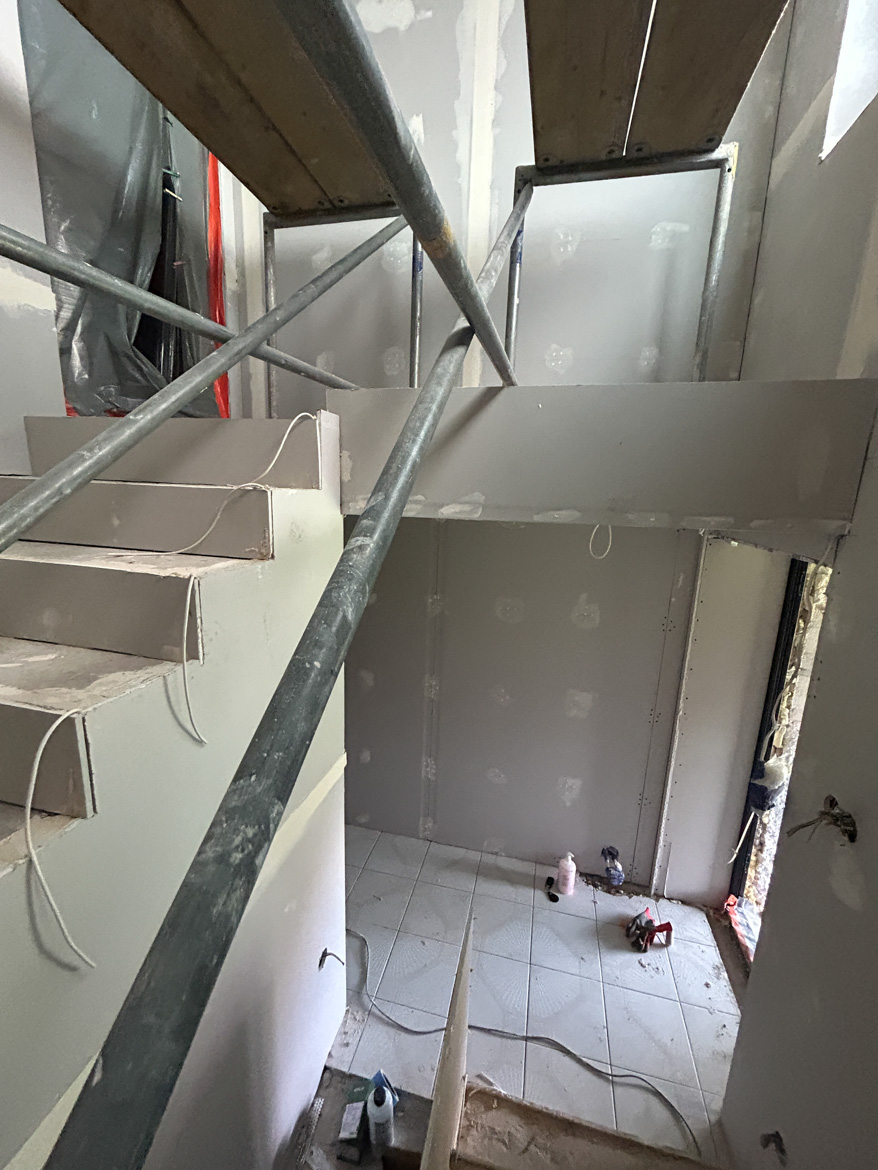
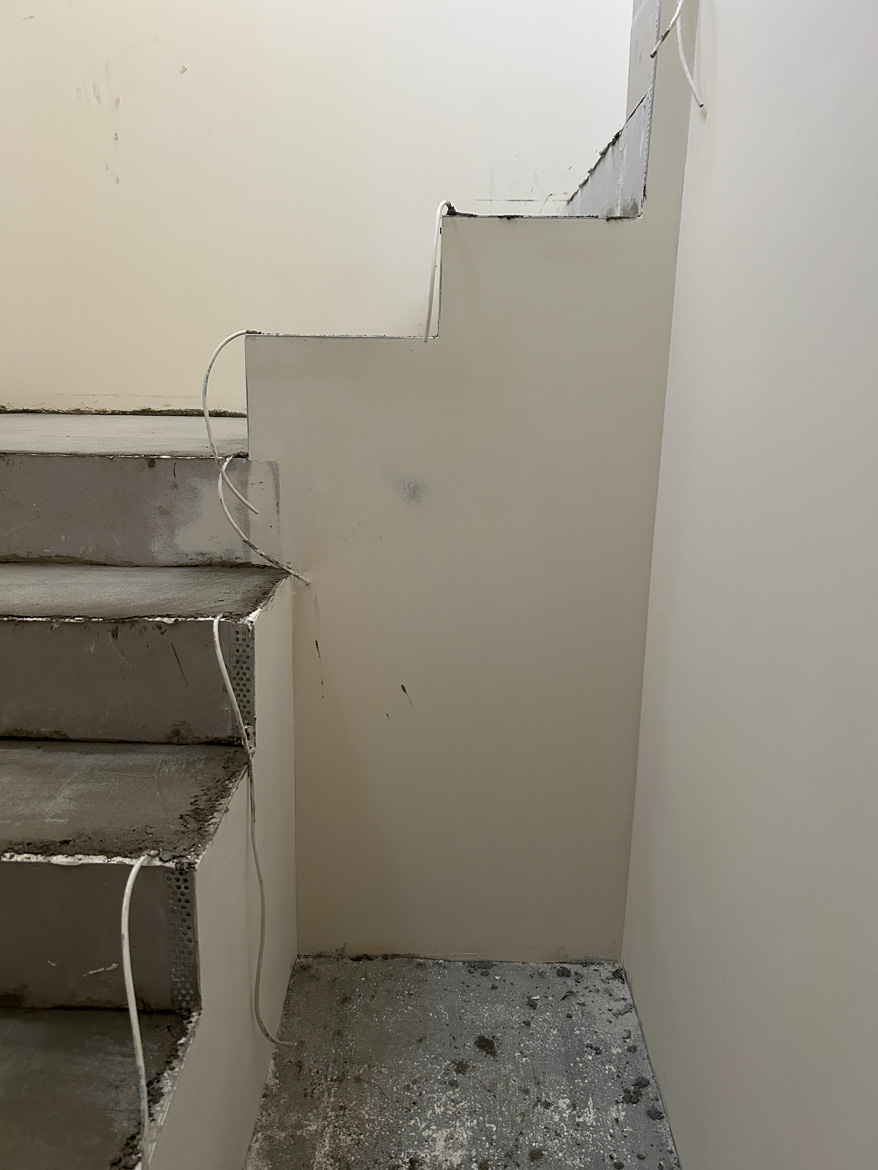
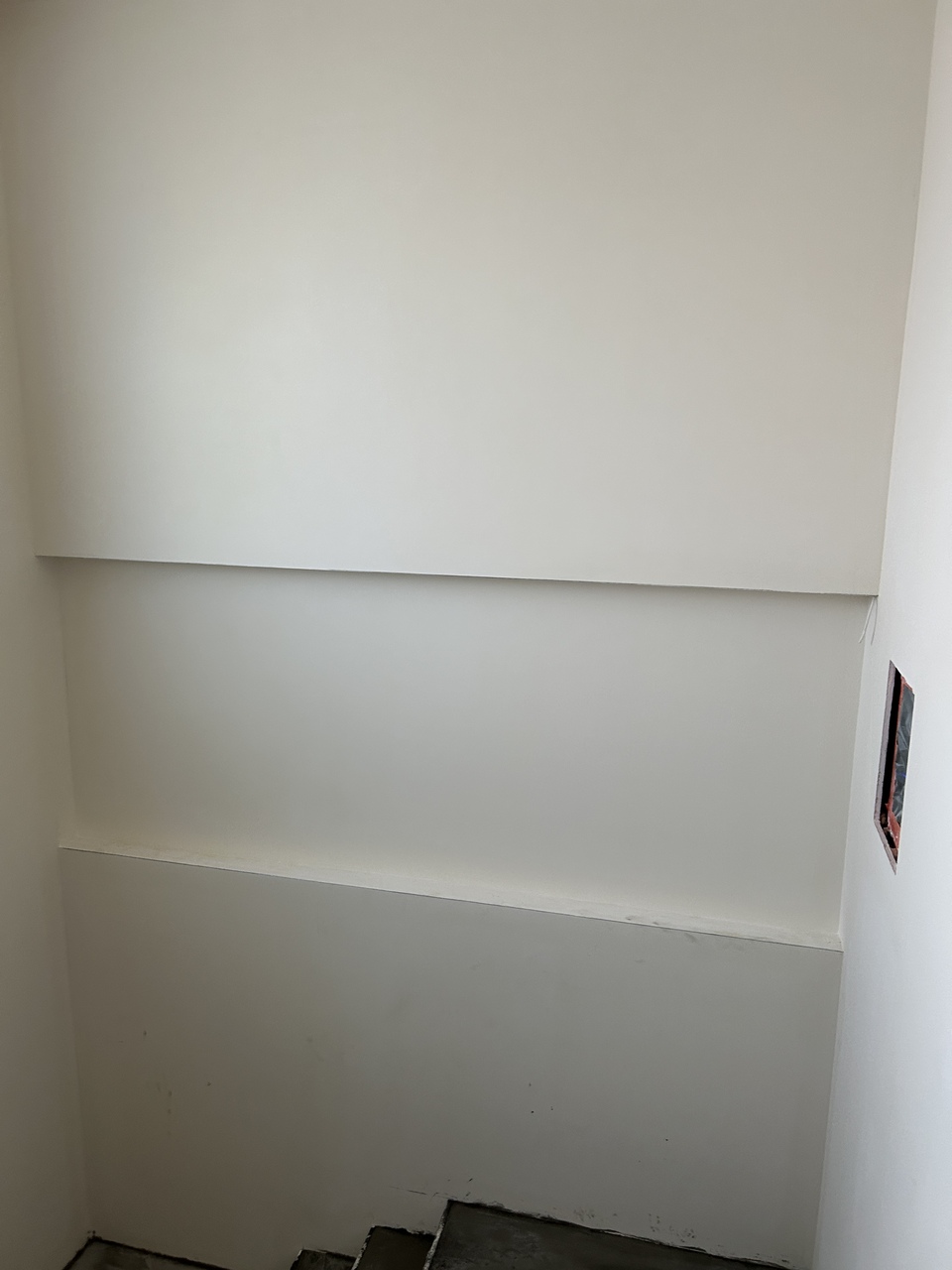
And then it started in earnest. It was time for a general renovation of the staircase. A team entered the house, and from day one they worked efficiently and organized. Scaffolding appeared almost immediately, and with it several people working simultaneously on different levels. Each day brought visible changes – walls, ceilings, details step by step began to take on a new character.
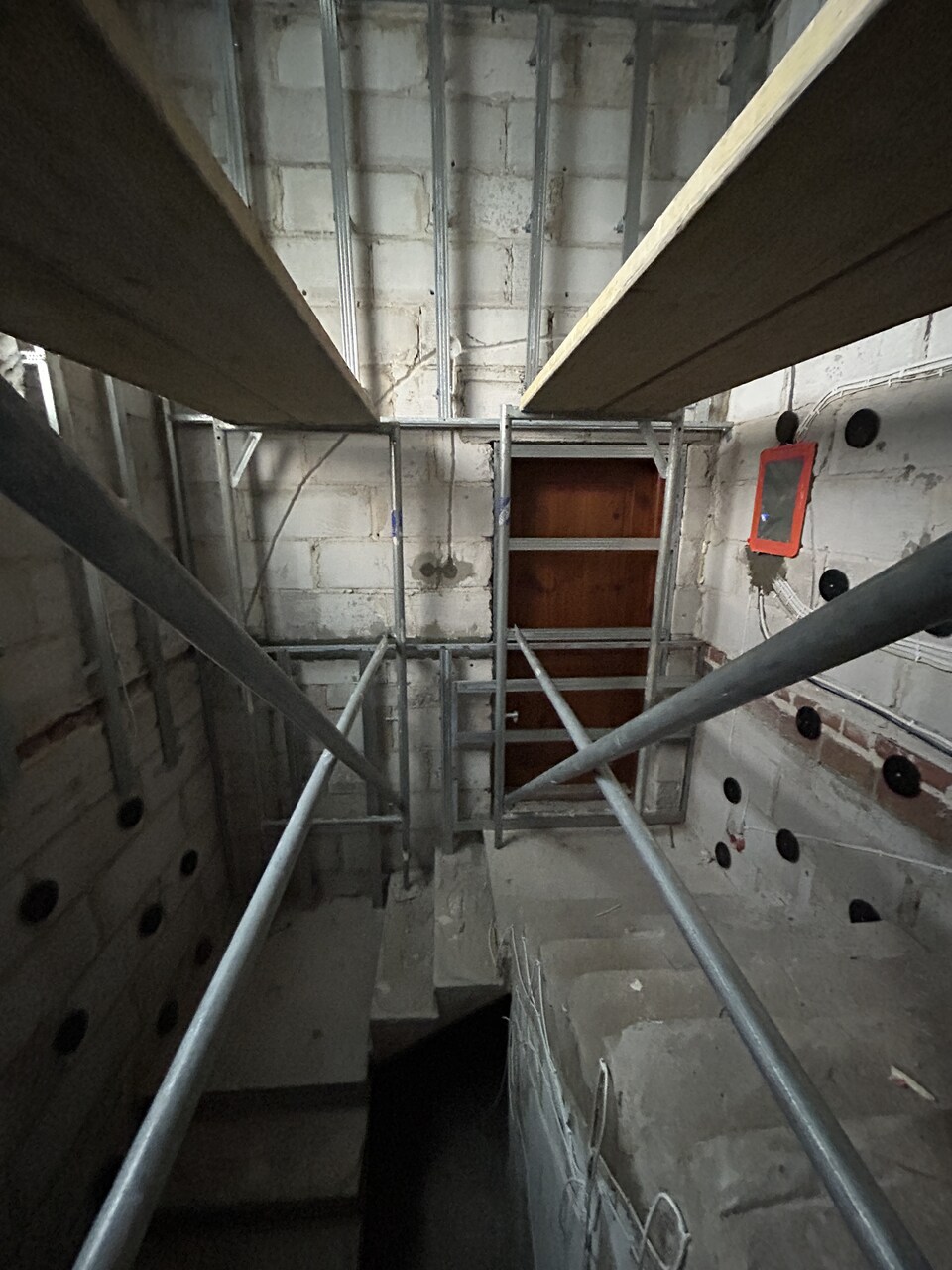
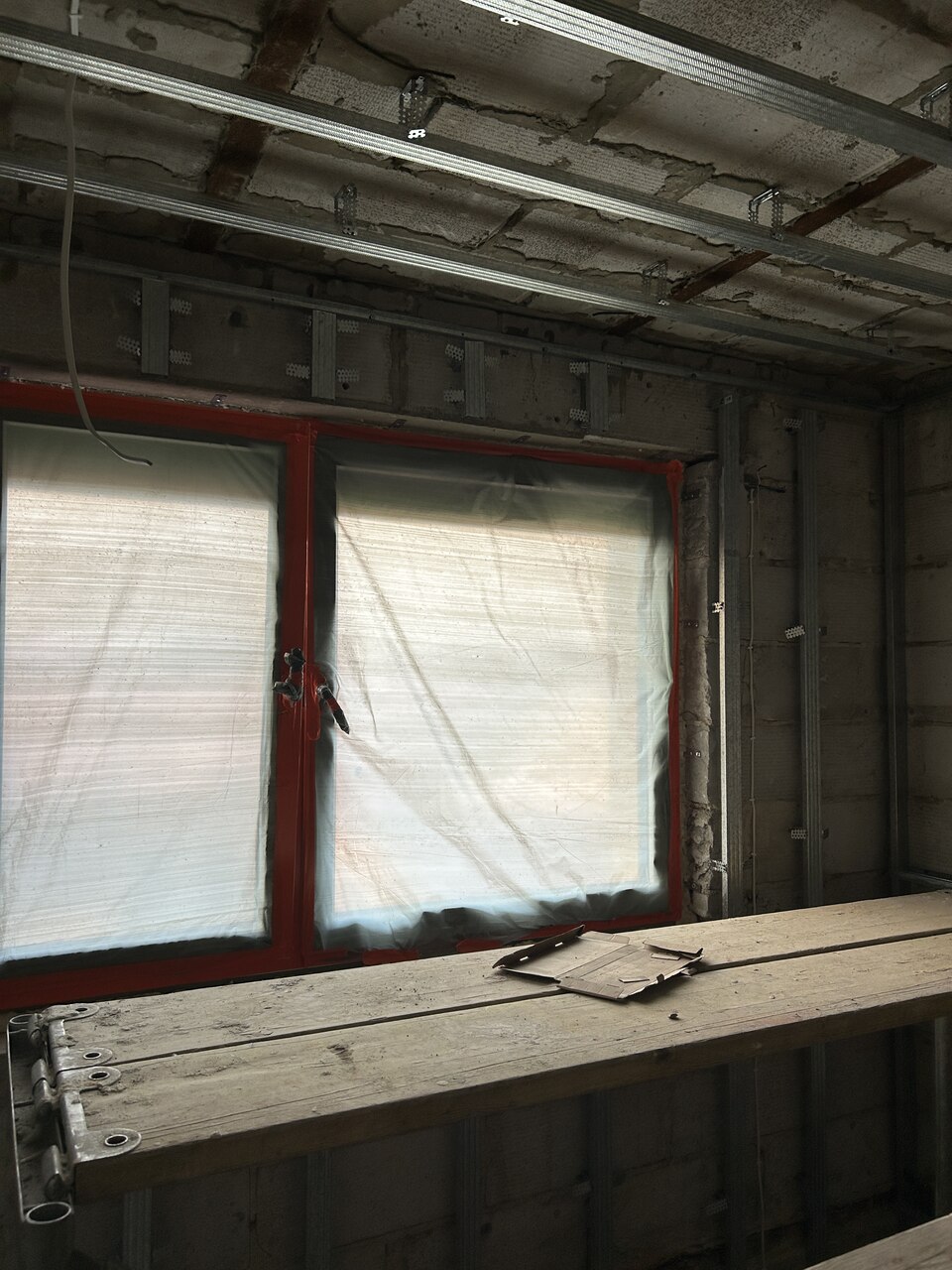
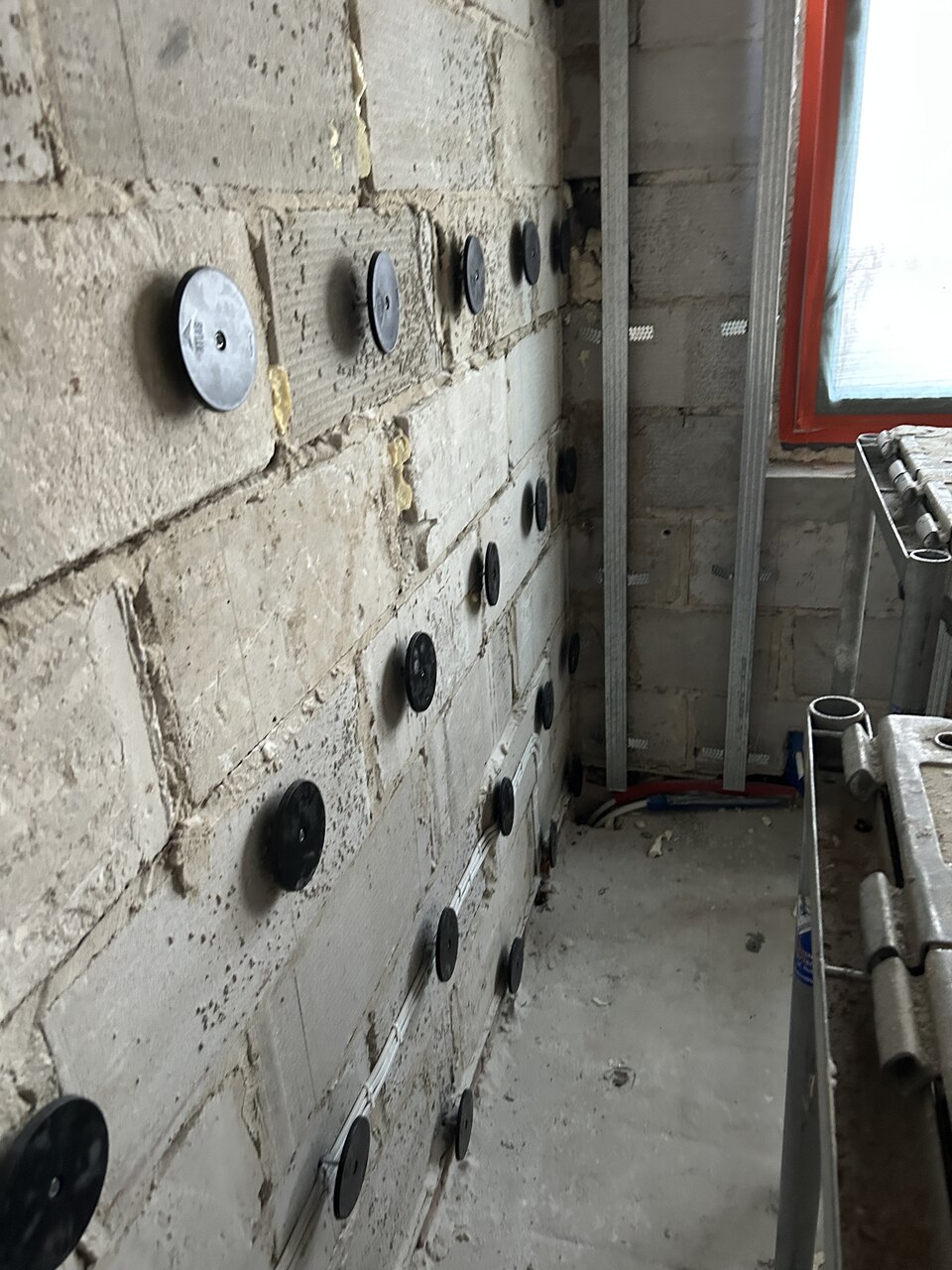
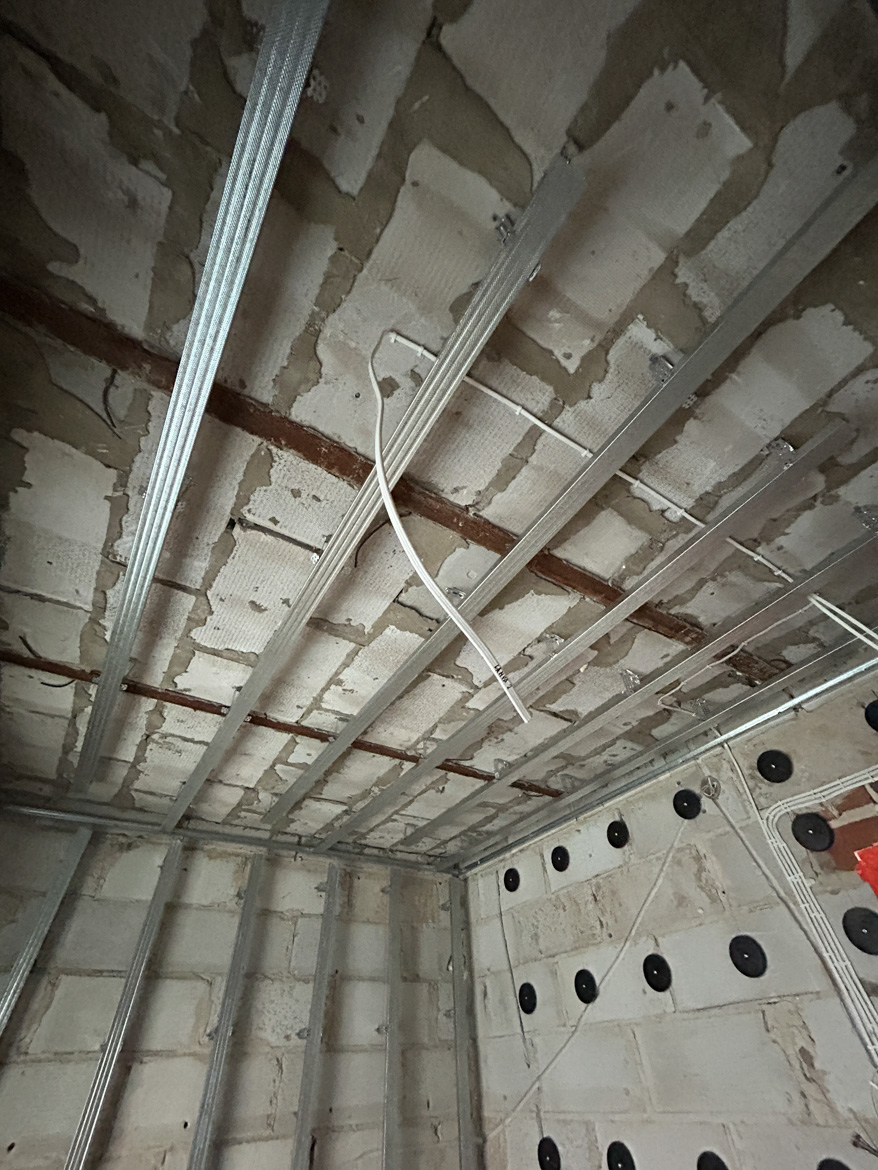
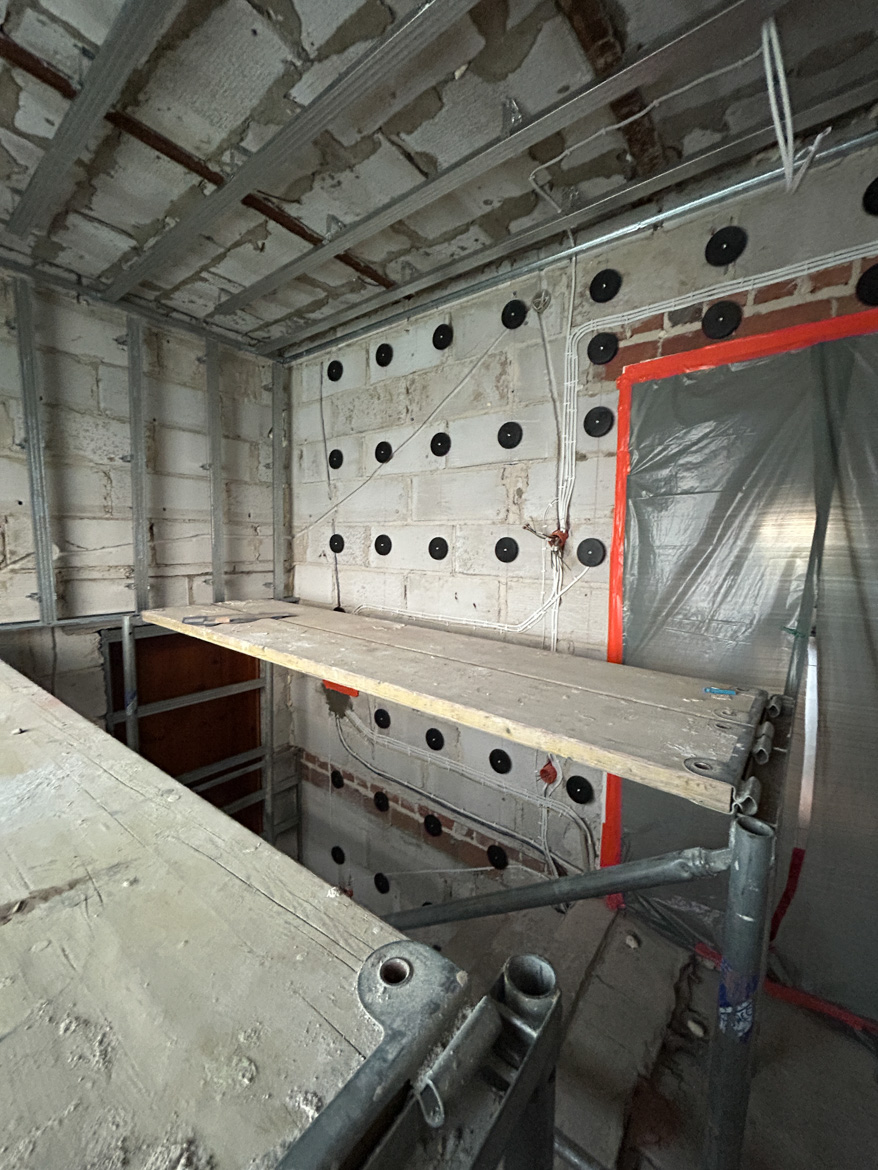
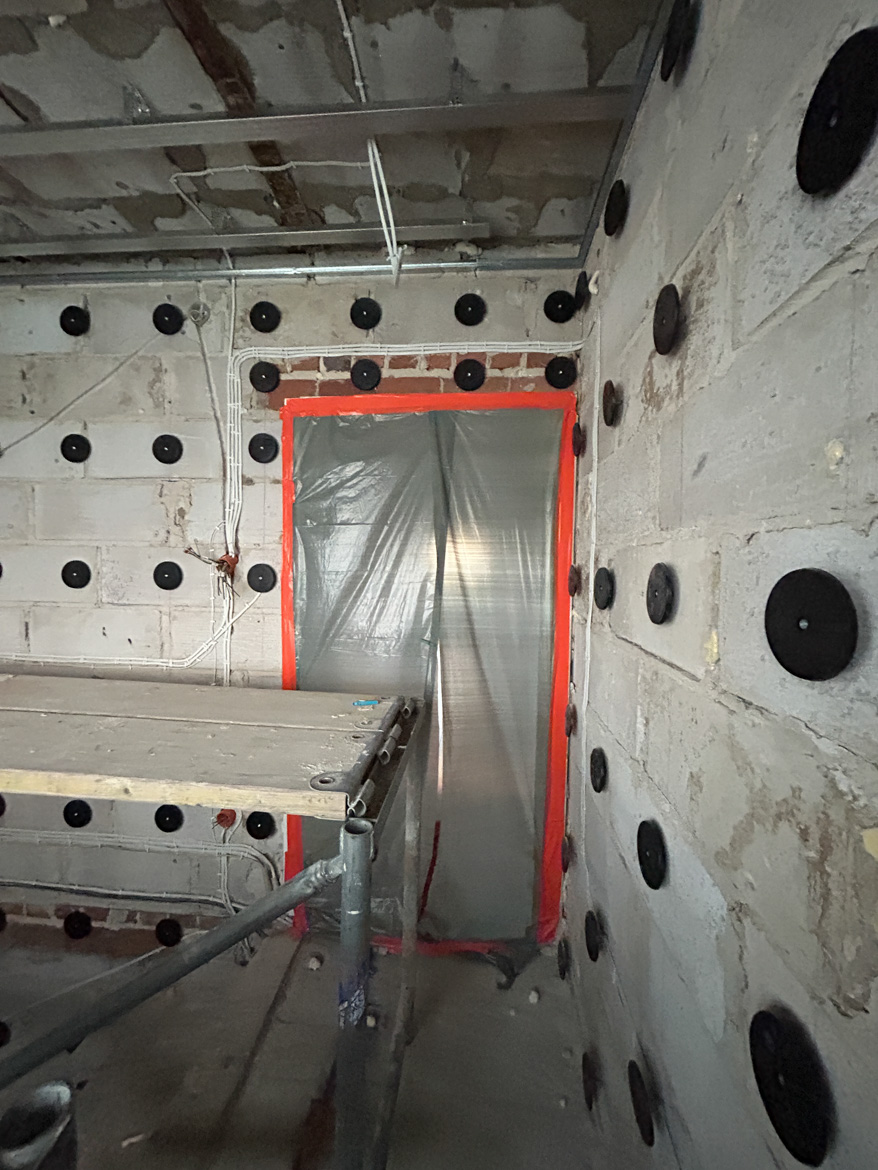
It was a moment when the house was literally changing before our eyes. From a place that had been a construction site for a long time, the staircase began to undergo a metamorphosis into a space you wanted to see. Each successive stage was a step towards a better one – closer to the vision, closer to the goal, closer to the place where you really want to be.
When there’s a question mark at the finish line
Everything was slowly beginning to move toward completion. Day by day progress was evident, the next stages were closing in, and we were catching ourselves more and more often that instead of seeing the “construction site” we were starting to see our staircase. And that’s when the moment came that tried again to shake us out of that certainty.
Because although most of the things were already finalized, the place for the decoration still did not look the way we wanted. Supposedly “almost done”, supposedly “can be done”, but this “almost” in our case was not an option – especially since this decoration was for us the heart of the whole concept. As if that wasn’t enough, we still heard that there might be a problem with installing the lighting around, exactly as we had planned. That “it won’t work,” that “it will be hard,” that “it’s better to let it go.”
And that’s when we said to ourselves inside: no.
We didn’t take it for granted that something we’d been waiting so long for and that had been fine-tuned in our heads for months should suddenly come crashing down with a phrase like “there will be a problem.” We rejected it outright. Because we didn’t do this renovation in order to compromise on the most important point at the end.
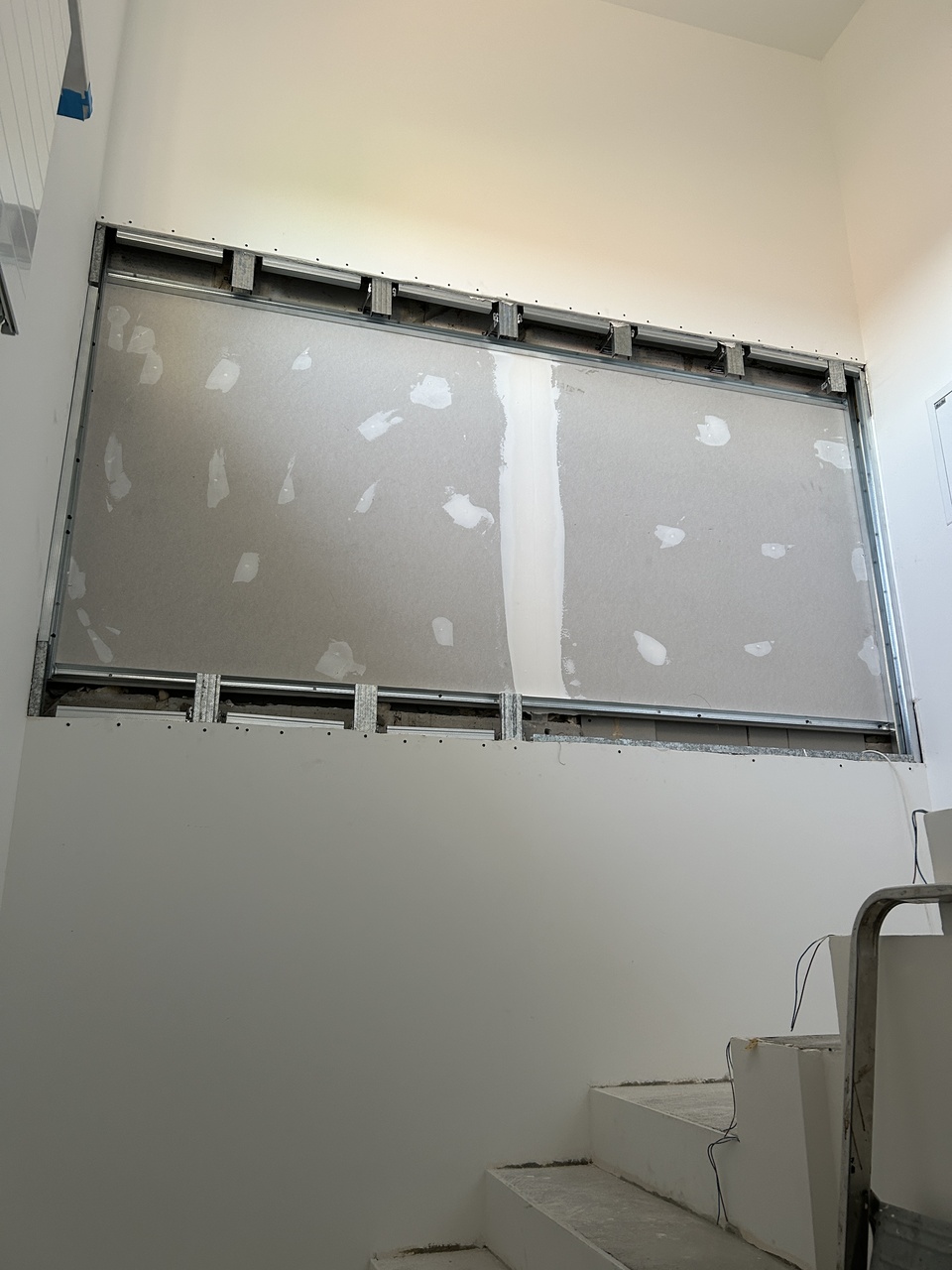
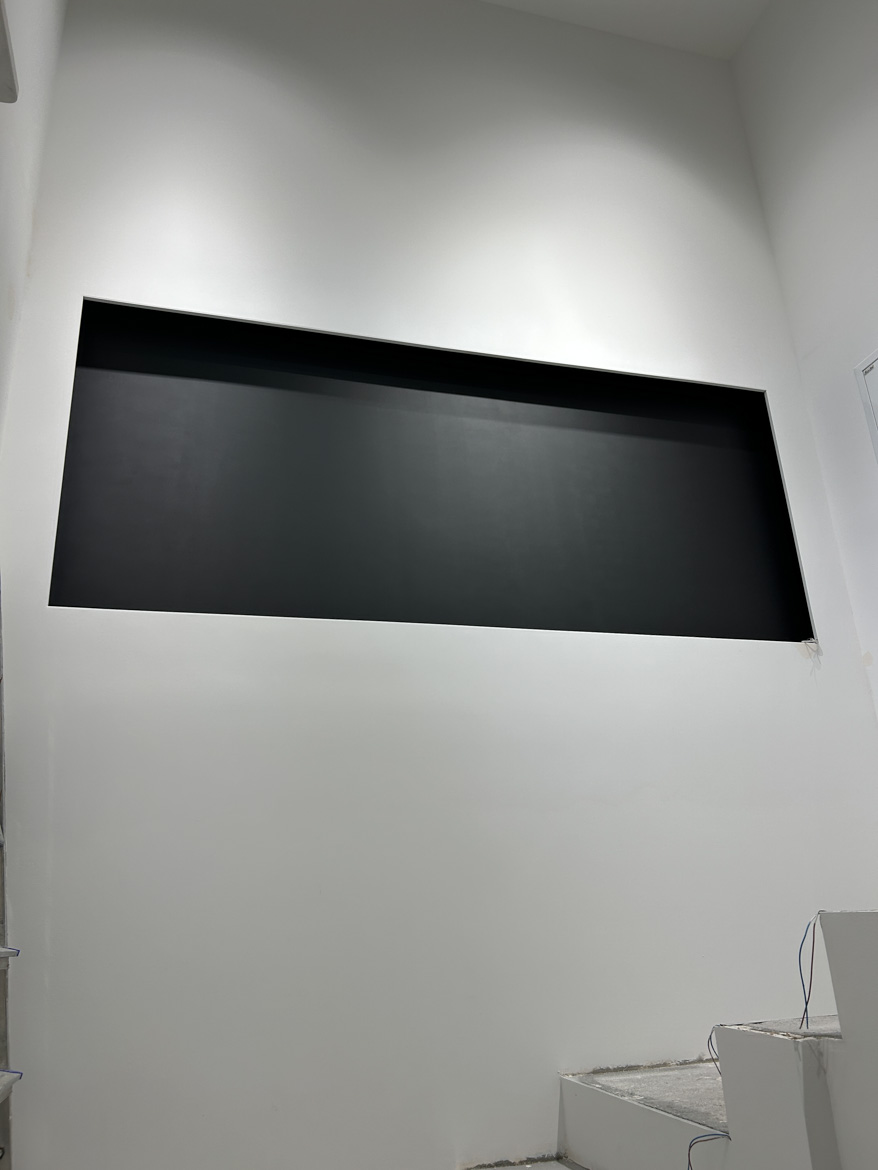
That’s why we contacted a second team – people who don’t just “do”, but most importantly know how to do. They came, looked, listened to our vision, and instead of a list of problems, we heard something that at that moment was like a reset for the head:
“Take it easy. We’ll do it. No problem.”
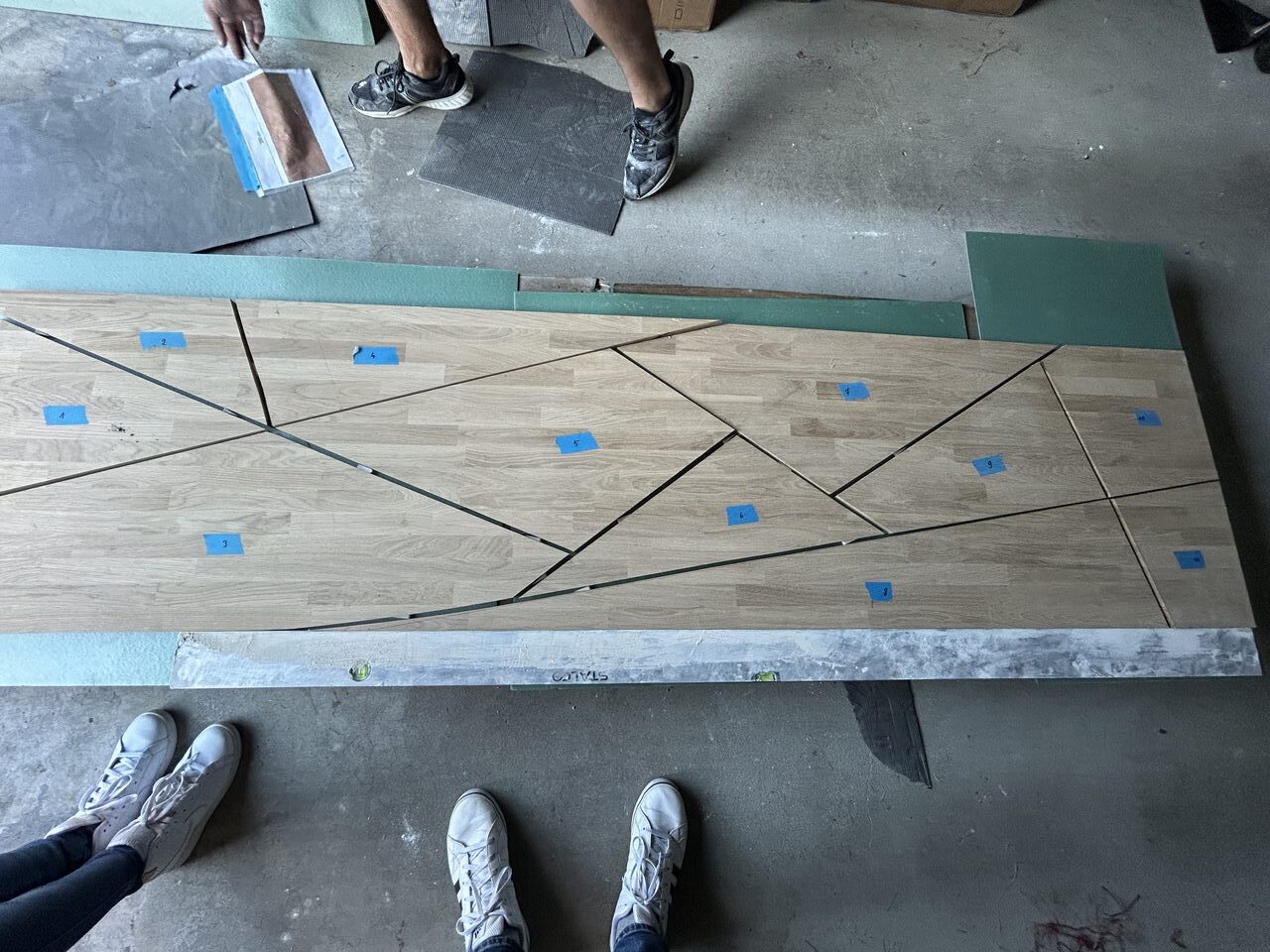
And then something began to happen that you remember for a long time. It was as if someone slowly lifted a weight off the chest – a stone began to descend from the heart. Because suddenly the tension disappeared, the belief returned that the finish would be exactly as we dreamed. And we didn’t have to wait for the results: with each passing day we could see that everything was going in the right direction, exactly in our direction. And this was the moment when we felt again: it will happen – and it will look the way it was supposed to look from the beginning.
Treps, railings and the final before Christmas
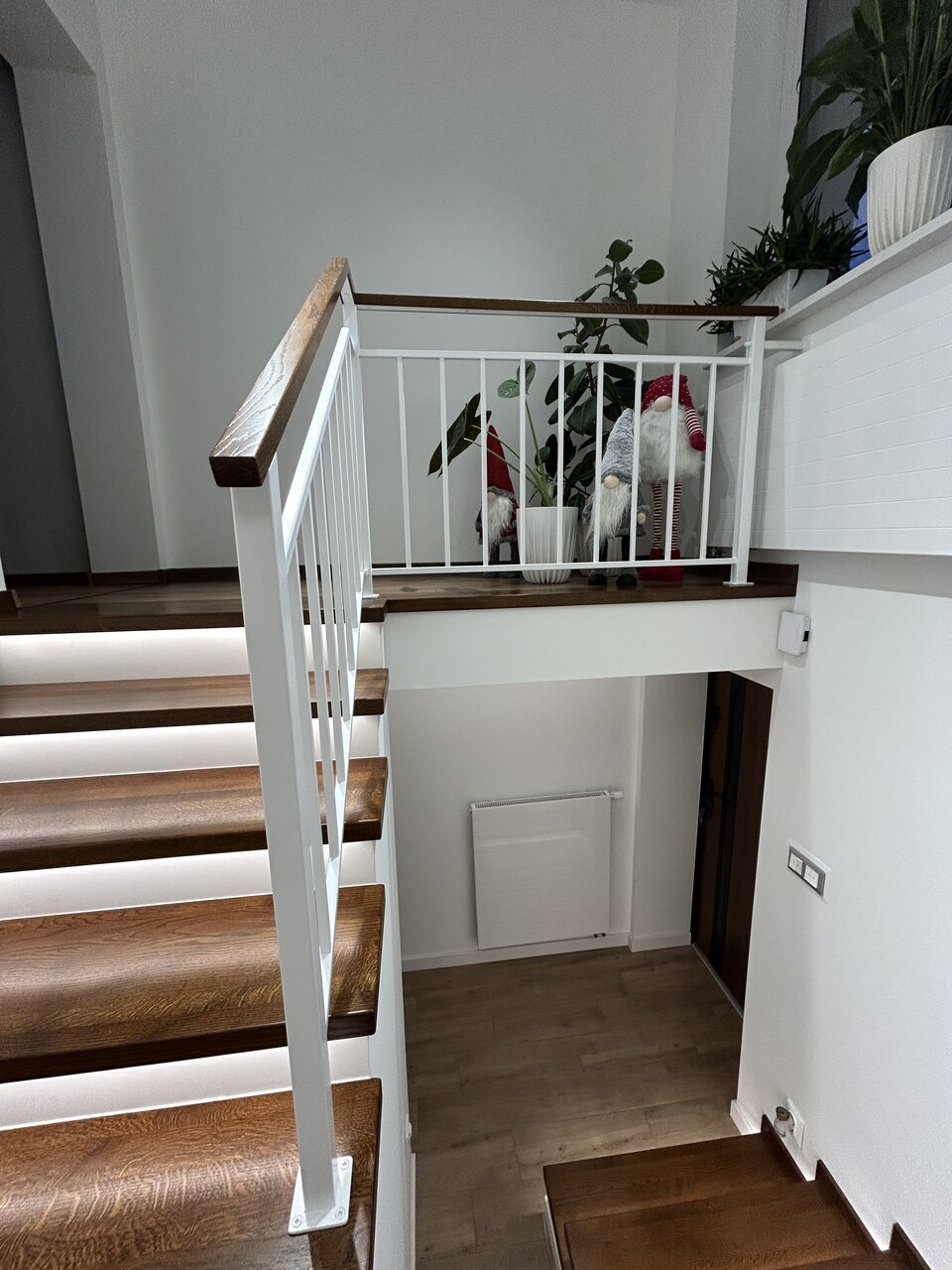
Closing this stage was to make the stair trellis. Even after talking to the contractor, it was clear that fitting in before Christmas would be difficult. However, my wife, known for her stubbornness and determination, saw it through. The trellises were made beautifully and solidly.
Literally moments after their installation, we contacted a company specializing in making balustrades, which were to be the final touch to the whole metamorphosis. And here again we were told that this year the realization might not work out. But once again, determination prevailed. The balustrades were built, and we – just before Christmas – could enjoy the final result.
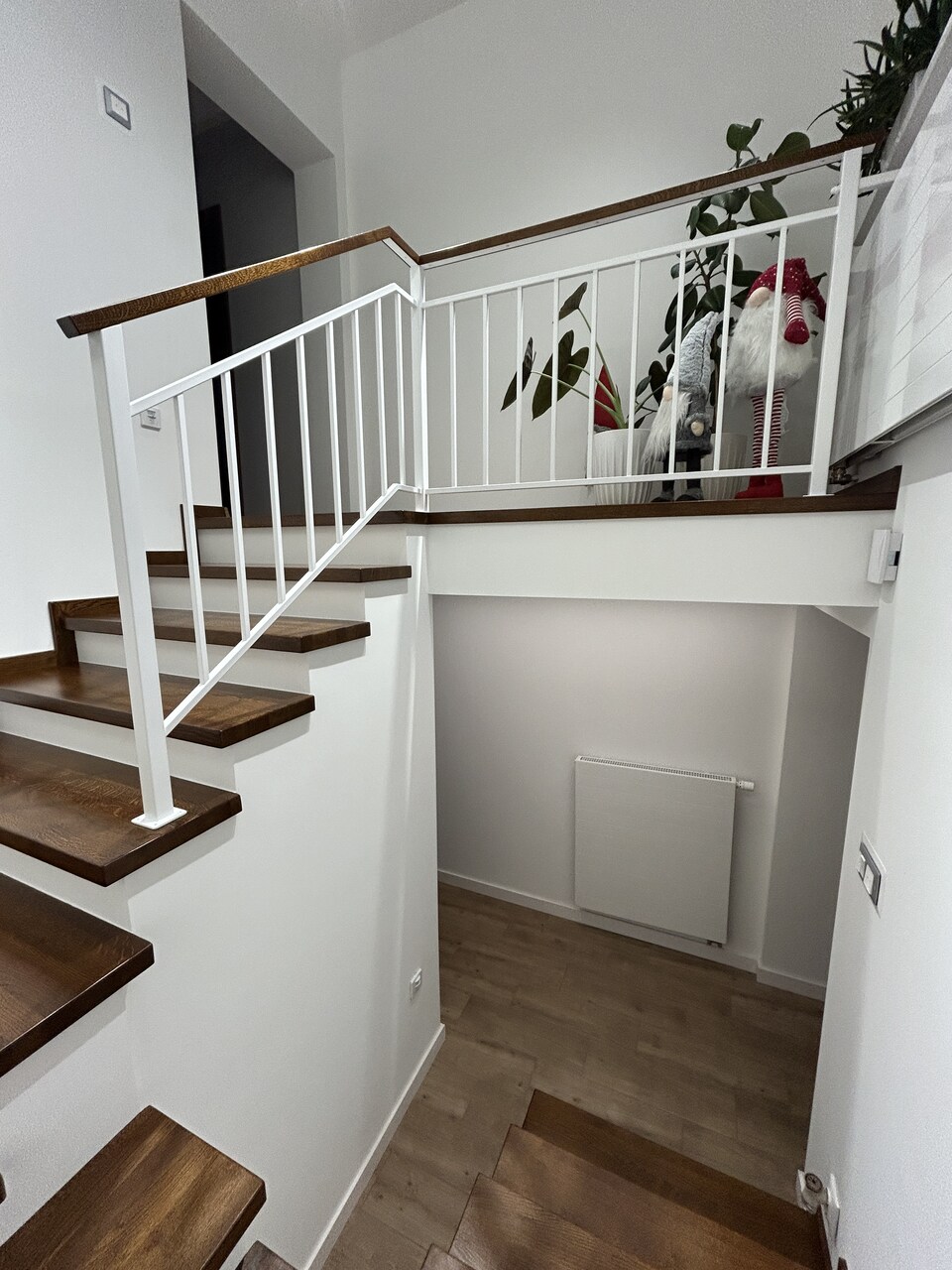
After ten months of painstaking work, sometimes a real tug-of-war with adversity, today we look at our staircase as a realization straight from Pinterest. The design was not uniform, but its roots were largely there. Today, the roles are reversed – now we are the ones who pass on our story and let it inspire others.
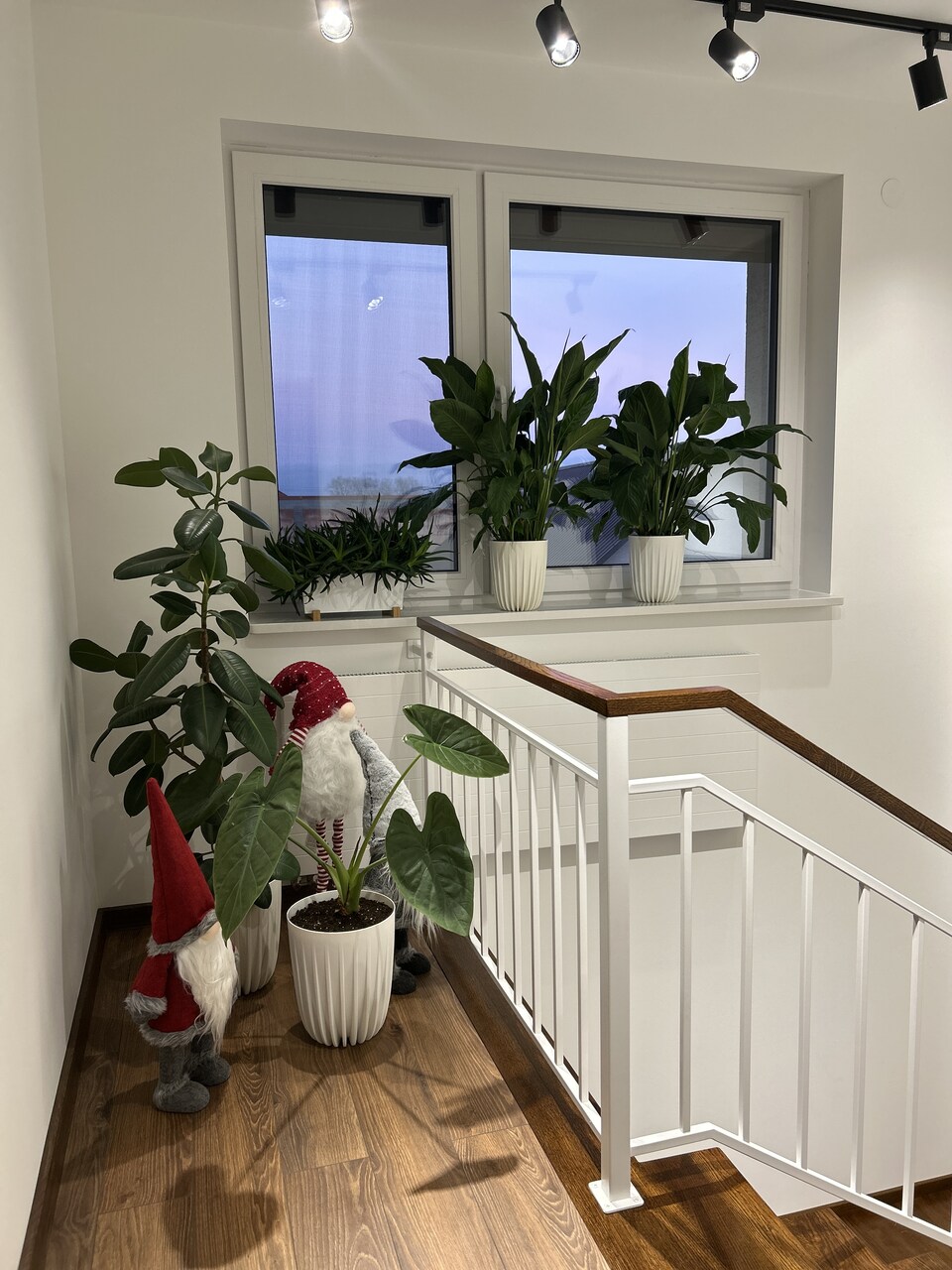
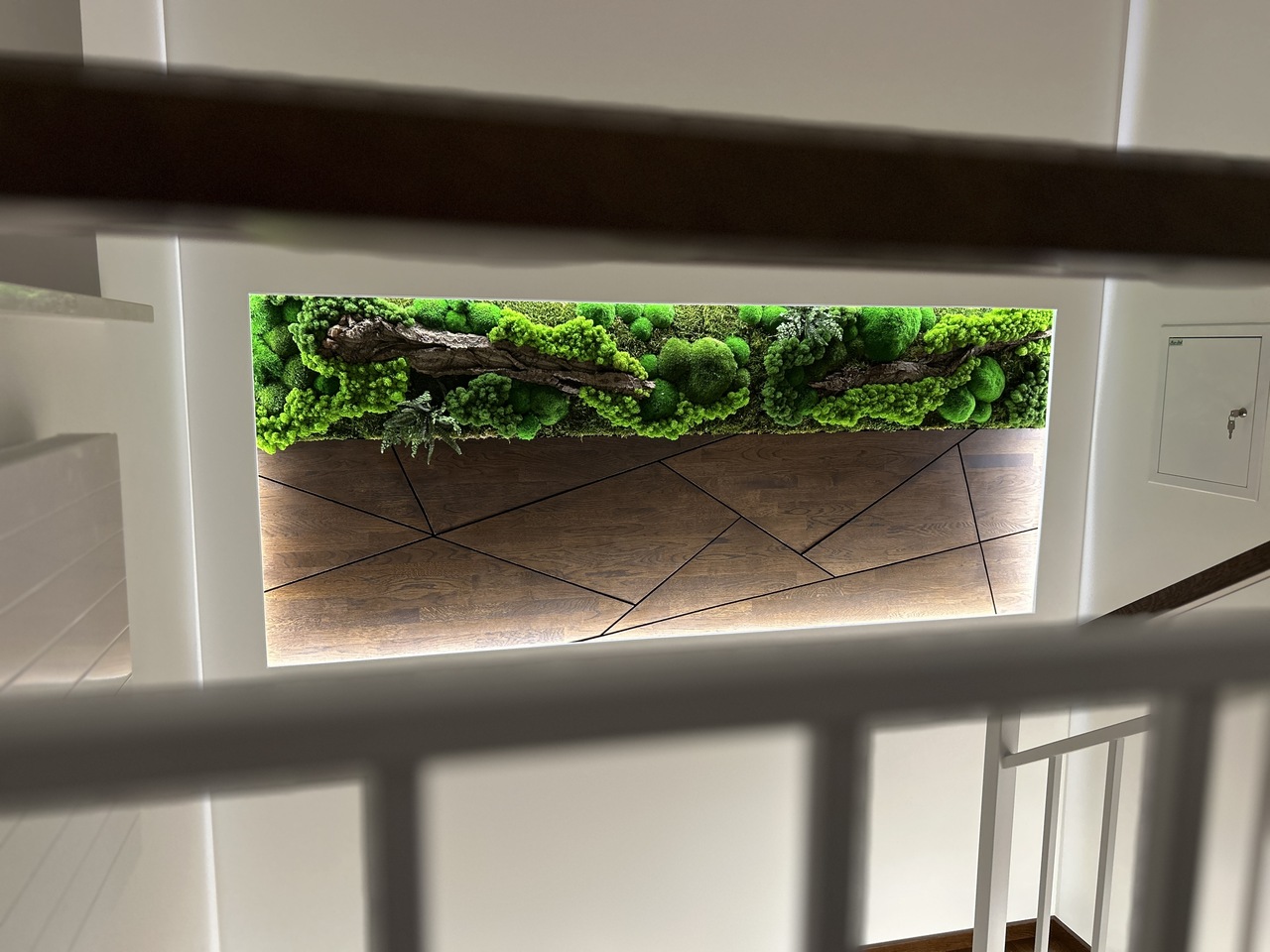
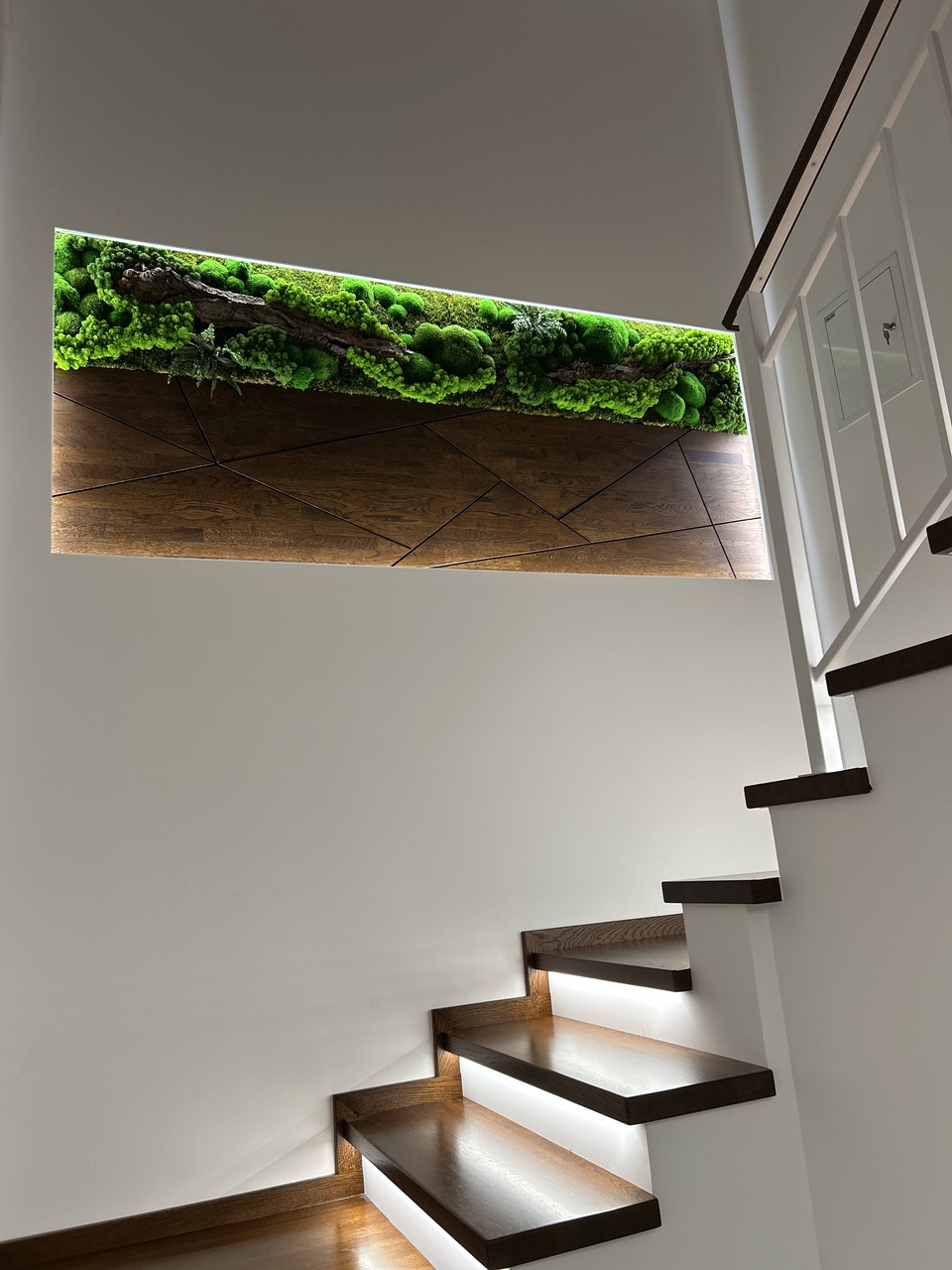
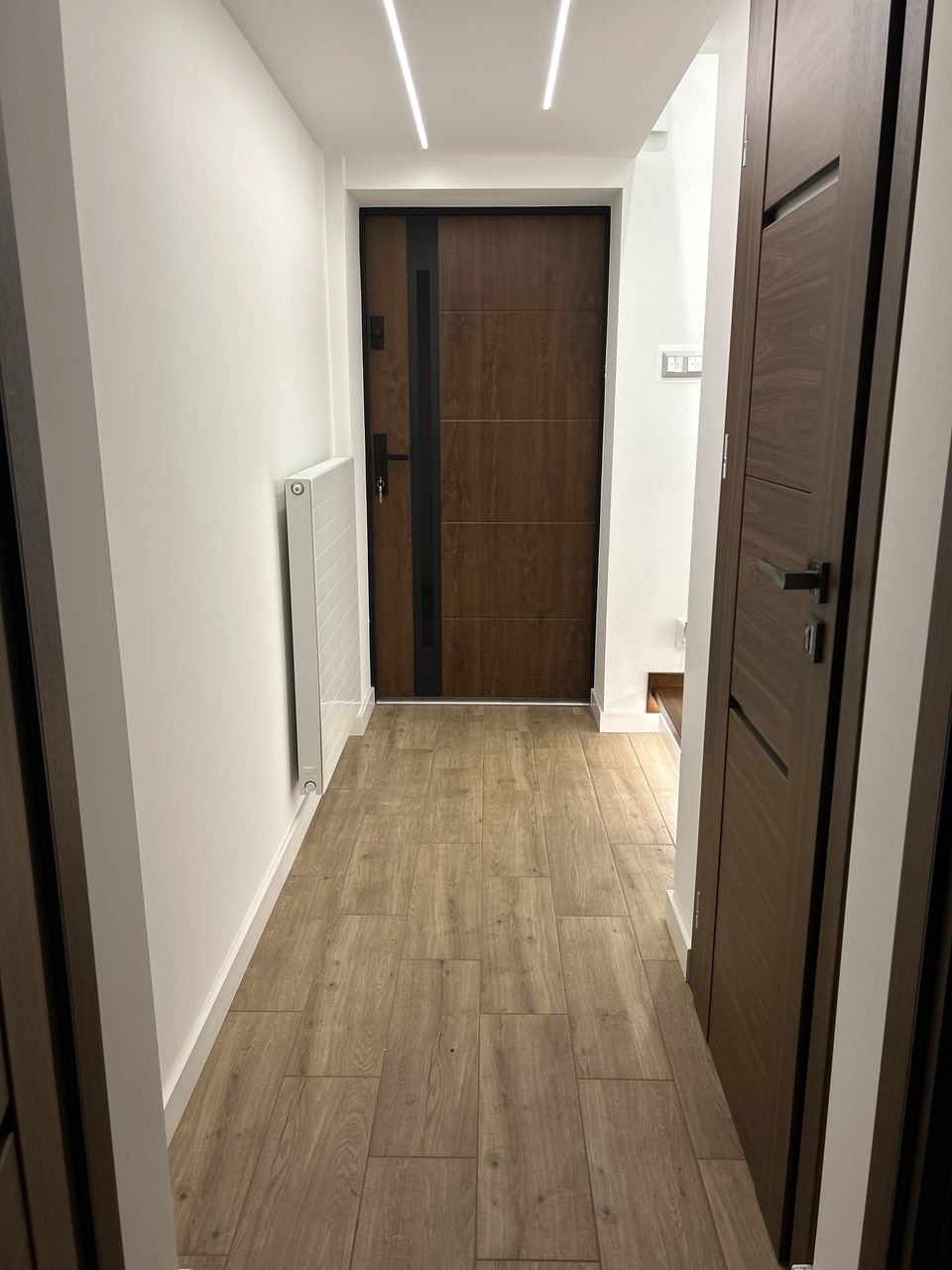
Pdsummary
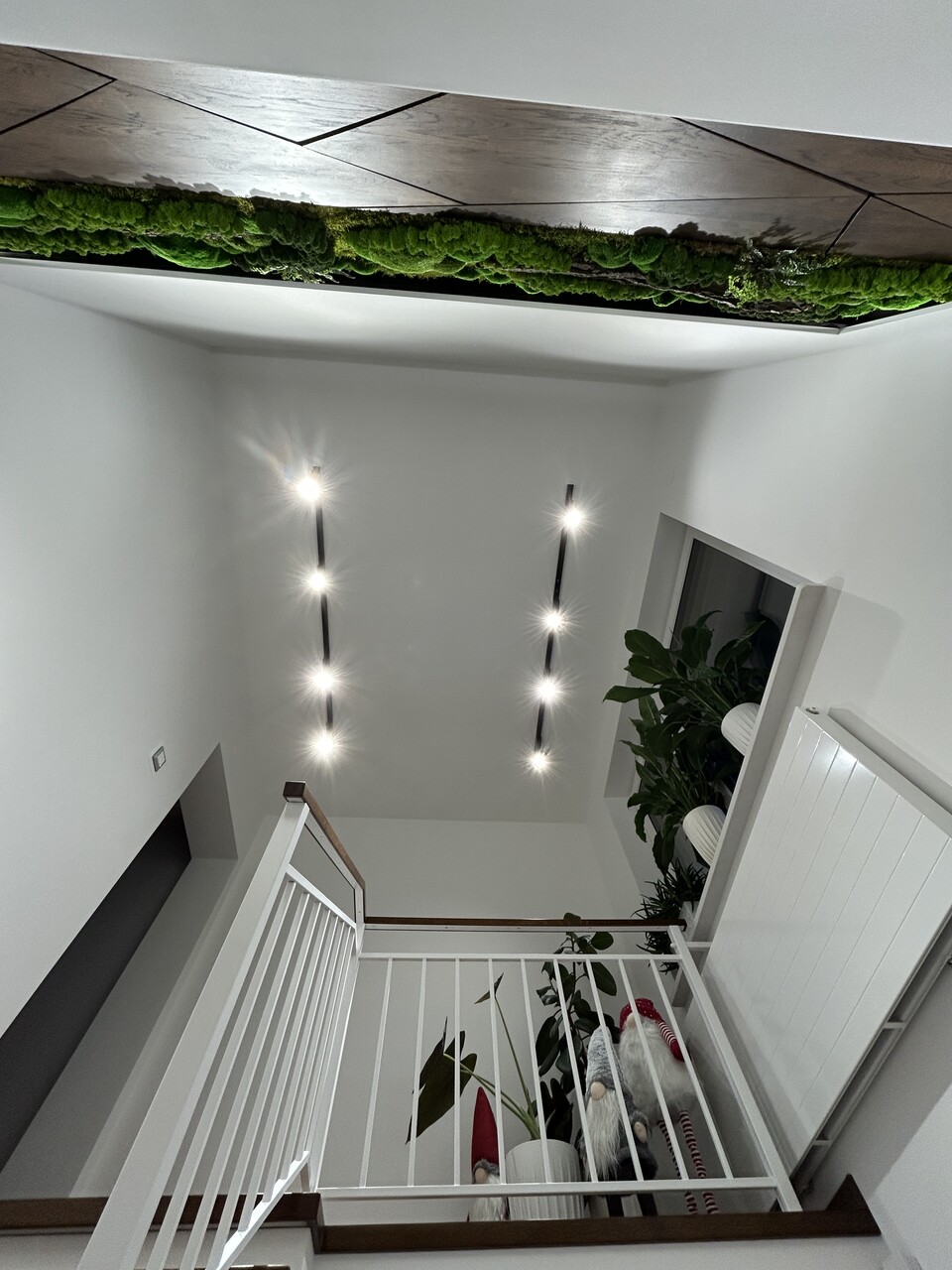
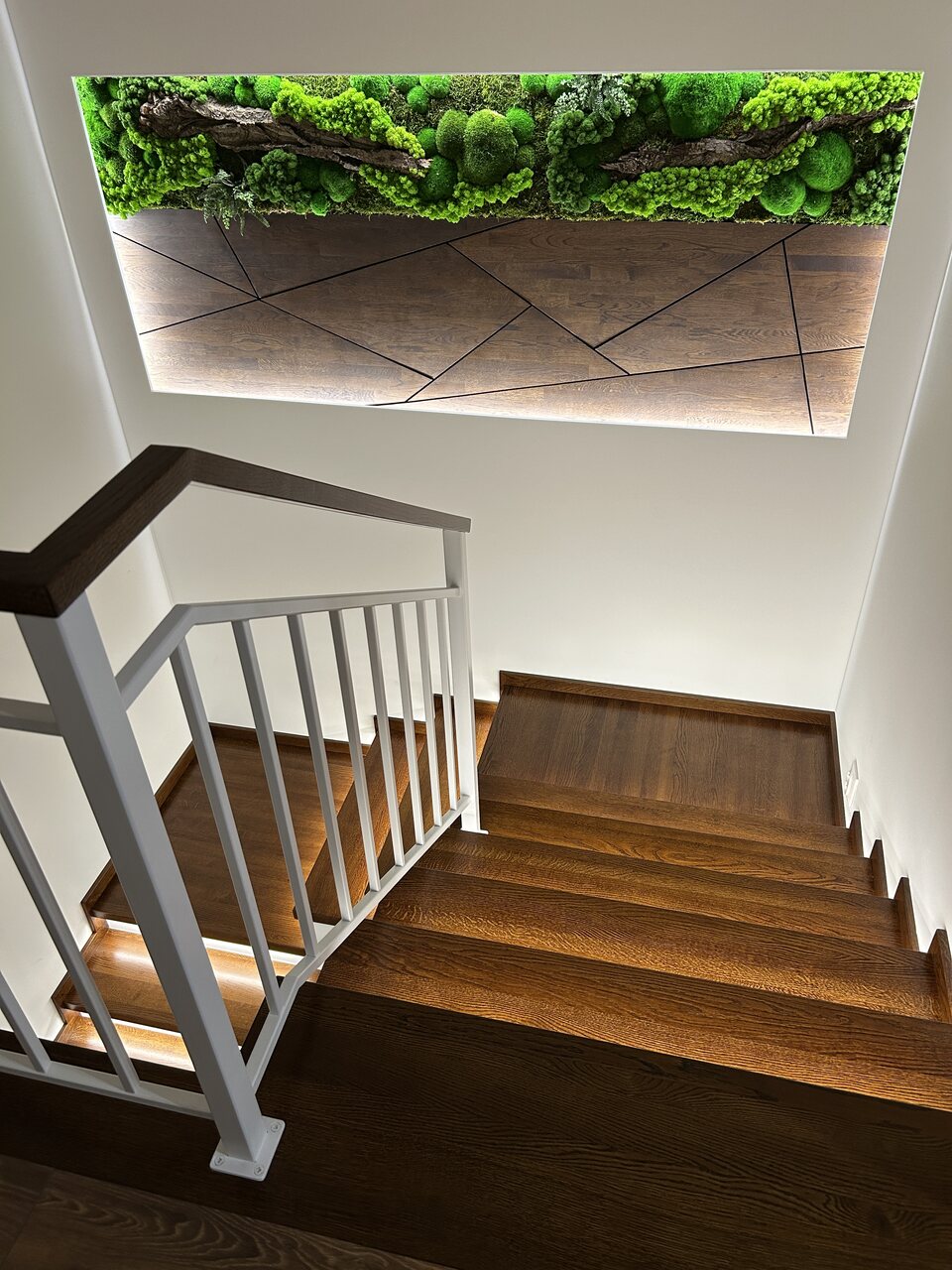
We did this renovation in a house from the 1980s. The photos show the actual condition before, during and after the renovation.
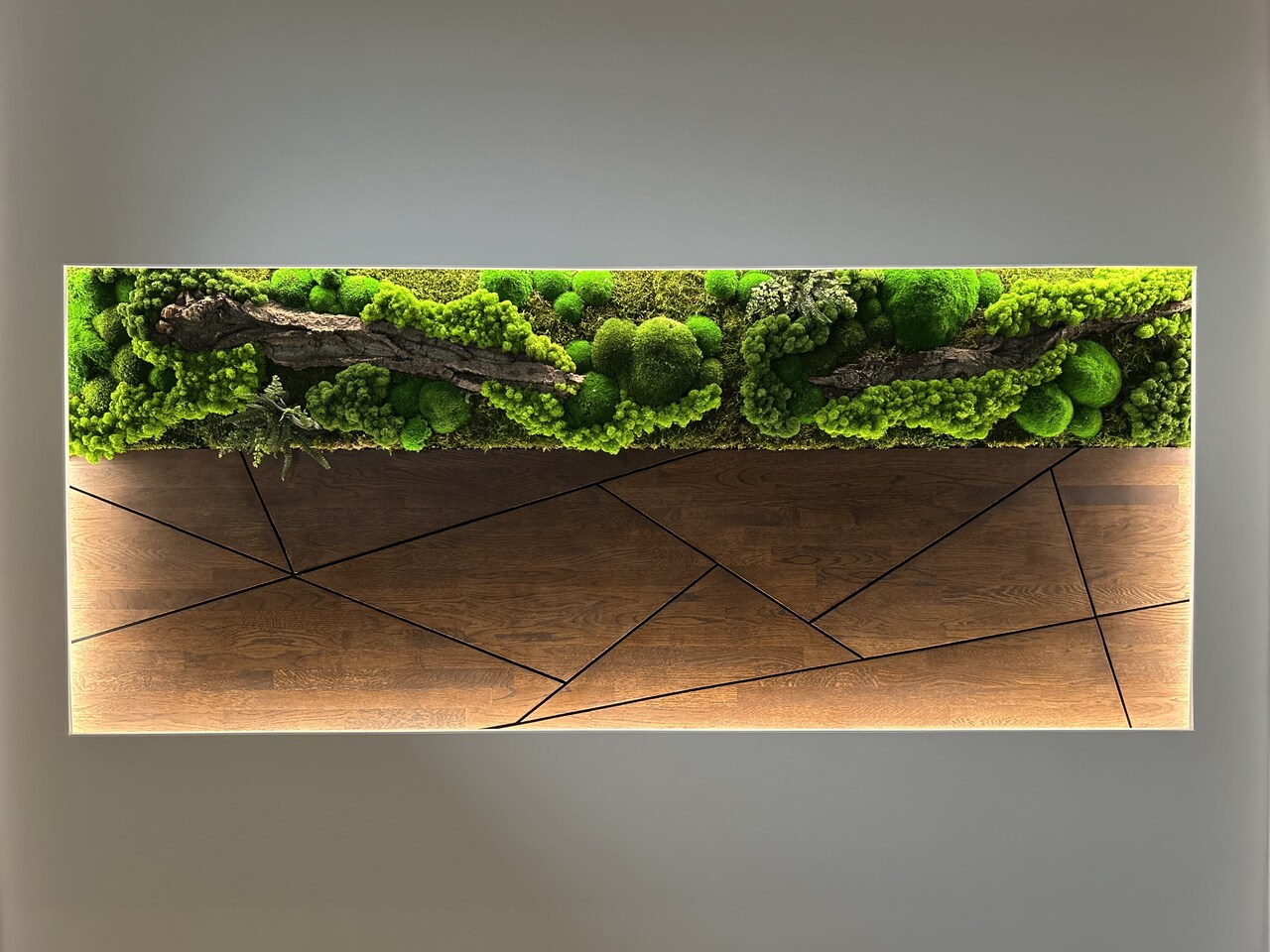
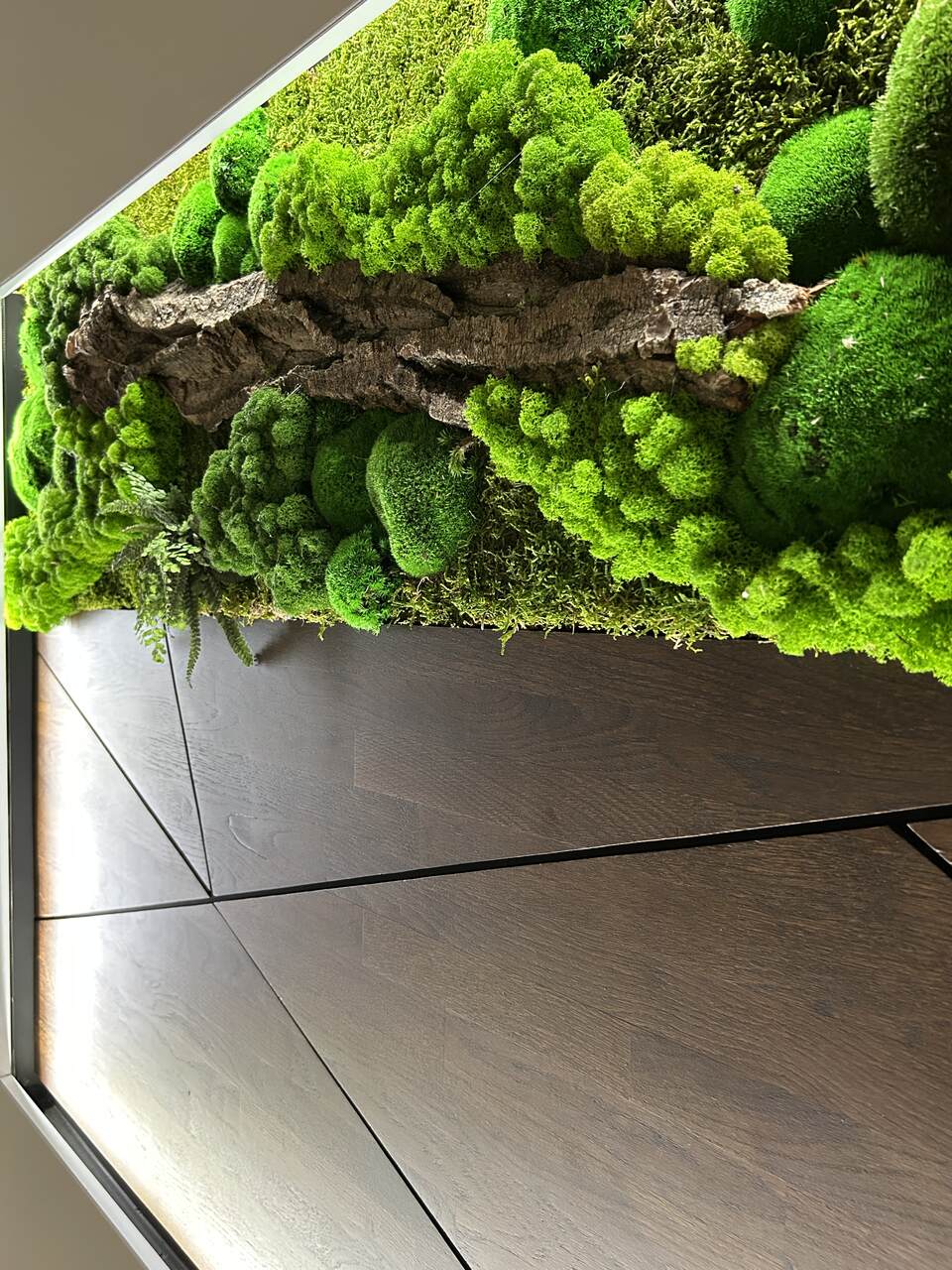
The motif with wood and moss did not appear by accident. From the very beginning we wanted to feel nature in this space – its tranquility, rhythm and authenticity. We were looking for something that would be a counterbalance to the rush of everyday life and at the same time something that would stay with us for years. The inspiration matured slowly, but one thing was certain: wood was to be the heart of this staircase.
In a way, it was also a symbolic change. We replaced the old paneling, which had served its purpose for decades, with a new form of wood – visually lighter, more conscious, matching our times and our style. Instead of closed, heavy planes, there is a decoration that “breathes”.
It was complemented by moss – a lively accent that brought naturalness to the interior in its purest form. Thanks to it, the staircase ceased to be just a communicative space, and became a place that you really feel. It was the combination of wood and greenery that gave us what we were looking for from the beginning – a sense of closeness to nature in our own home.
Frequently Asked Questions (FAQ)
Can a communist-era staircase be transformed into a modern space?
Yes. The most important thing is to remove heavy elements such as wainscoting, brighten the interior and use modern lighting and consistent finishing materials.
Does PRL paneling need to be removed in its entirety?
Not always. If the wood is in good condition, it can be partially preserved or reused, for example, as a decorative element, but in most cases its removal greatly brightens the space.
What colors will work best in a modern staircase?
Light, neutral colors, such as white, warm grays and beiges, which optically enlarge the space and reflect light well, work best.
What kind of lighting to choose for the staircase after renovation?
A modern staircase should have multi-point lighting: LED strips at the steps, ceiling lights and spot sconces to enhance safety and aesthetics.
Is it expensive to renovate a communist staircase?
The cost depends on the scope of the work. The biggest expenses are new wall finishes, stairs and lighting, but even small changes can give a very good visual effect.
How long does it take to renovate a staircase?
With a standard scope of work, renovations usually take from a few days to a few weeks, depending on the complexity and availability of materials.
Is it possible to renovate the staircase in stages?
Yes. Often renovations are done sequentially: walls, stairs, and finally lighting and details, which allows you to better control the budget and organization of the work.
I am writing this as Piotr Solak an employee of Deerhorn🙂 – not an architect, not an interior designer, but someone who went through this journey from start to finish. If this story helps even one person to dare to make a change, it means it was worth it.